Category: Thinkery

  • The Fabulous, Feisty, and Fortuitous Forty

    The Fabulous, Feisty, and Fortuitous Forty

    The Fabulous, Feisty, and Fortuitous Forty

    The Fabulous, Feisty, and Fortuitous Forty

    CenaCrew, let’s get biblical (and maybe a little existential). I considered calling you all CenaCult, but that felt like the kind of thing that would land me on a watchlist. So, CenaCrew it is! Now, today’s topic? The sneaky, surprising, and downright omnipresent number FORTY.

    I’ll be honest—I used to think Forty was just a number people dreaded when they realized their knees had started narrating their every move. But after an eye-opening moment this past holiday season (which involved me sitting on the floor to wrap presents and then needing three business days to recover), I see things differently. My personal resolution? All future gift-wrapping shall be conducted at a table like a dignified adult.

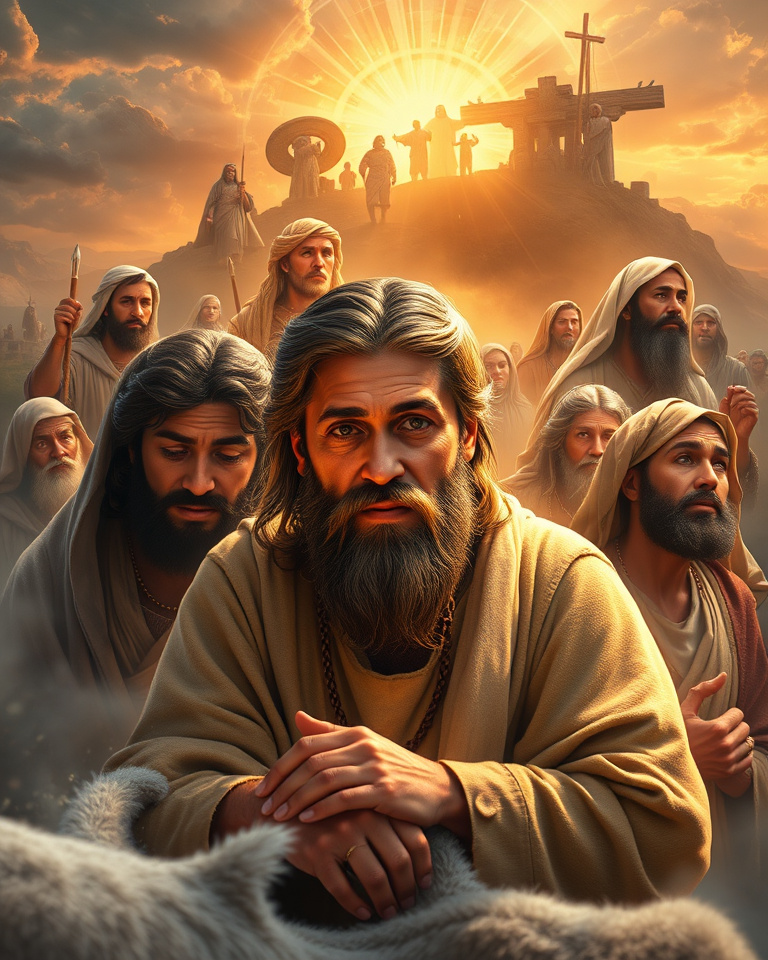
    But back to business—Forty isn’t just a number; it’s a powerhouse in the Bible, showing up like that one overachiever in class who has their hand up before the question is even finished. This number means testing, trials, preparation, purification, and transformation. Let’s break it down.

    Noah’s 40-Day Aquatic Adventure

    In Genesis 7, Noah and his family endured Forty Days and Forty Nights of Rain. Can you imagine being locked inside an ark for that long with no escape, limited snacks, and an all-animal soundtrack? This was less “relaxing cruise” and more “divine reboot.” But once the waters receded, the world had a fresh start. (And I bet Noah had a newfound appreciation for dry land and fresh air.)

    Moses: The OG of Mountaintop Retreats

    Moses must’ve had next-level endurance because he spent Forty Days and Forty Nights on Mount Sinai receiving the Ten Commandments (Exodus 24). No food. No water. Just vibes. And then, thanks to some calf-worshipping shenanigans, he had to do it all over again (Deuteronomy 9). The patience on this man!

    Let’s not forget his early years: Moses was Forty Years Old when he fled to Midian (Acts 7), and then he spent another Forty Years herding sheep before God hit him with the burning bush and a life mission. If nothing else, Moses proves that sometimes you need a really, really long warm-up before the main event.

    The Israelites’ 40-Year Detour

    Ah, the Israelites. They had a direct path to the Promised Land but still managed to turn it into a FortyYear Wilderness tour (Numbers 14). Why? Because after spying on Canaan for Forty Days, they came back full of doubt. So, God hit them with a “fine, since you don’t believe, wander around a bit.one year of wandering for every day of doubt. Ouch.

    The Reign of the Forty-Year Kings

    It turns out Forty Years is the magic number for ruling, too. King Saul, King David, and King Solomon each reigned for Forty Years. That’s a long time to be in charge. Some of us can’t even commit to a meal prep routine for a week, let alone rule a nation for four decades.

    The Ultimate 40-Day Showdown

    Jesus took Forty Days and Forty Nights to fast in the wilderness, only for Satan to roll up at the end with, “Hey, want some bread?” The audacity! But Jesus wasn’t about to let a well-timed temptation ruin everything. Instead, He hit Satan with scriptures and sent him packing.

    Goliath’s 40-Day Ego Parade

    Before David shut him up with a slingshot, Goliath spent Forty Days taunting the Israelites. Imagine waking up every morning just to hear a giant screaming insults at you for over a month. Good thing David decided enough was enough.


    The Big Takeaway: Forty Is No Accident

    Clearly, Forty isn’t just a coincidence—it’s a divine theme. Whether it’s a season of testing, transformation, or waiting for a breakthrough, Forty is when things shift. The Israelites found their Promised Land. Jesus launched His ministry. Moses received the Ten Commandments. If you’re going through your own “Forty Season,” maybe it’s not just struggle—it’s preparation.

    This symbolism carries into Christian practices, too. Lent is Forty Days of Fasting, mirroring Jesus’ wilderness experience. Some Christian traditions observe Forty-Day Mourning periods, reflecting purification and transition. Forty is everywhere, my friends.

    Wrapping It Up (At a Table, Not the Floor)

    So, CenaCrew, the lesson here is twofold: First, if you’re in a period of struggle, transformation might be on the horizon. Second, if you’re over thirty-five, wrap your presents at a table.

    And with that, I’ll see y’all next time—hopefully before my own knees hit their Forty-Season.

  • The Grim Reaper Left Me on Read

    The Grim Reaper Left Me on Read

    The Grim Reaper Left Me on Read

    The Morbid Curiosity We All Pretend We Don’t Have
    Am I the only one who occasionally wonders what people think in their final moments? No? Just me? Cool. There are times when it feels like I’m seeing more “Rest in Peace” posts online than usual, but maybe that’s just my brain selectively filtering out death like it’s some kind of pop-up ad I didn’t ask for. It’s funny (not ha-ha funny, more existential crisis funny) how we can go days, weeks, even months without thinking about death—until someone we know dies, and suddenly, we’re all amateur philosophers pondering the afterlife, or the lack thereof. Do they go somewhere? Do they just poof out of existence? Or are they suddenly playing an ultra-realistic game of Sims in another dimension?


    Brain Matter Matters
    The first time I saw a human brain, it wasn’t in a textbook. It had fallen out of a bomb blast victim. If that sentence just made you pause, imagine being me in that moment. There were body parts everywhere, but that brain. That stuck with me. Psychology tells us that memories tied to strong emotions—whether good or bad—stick. Well, let’s just say my brain was busy imprinting that image with all the permanence of a bad tattoo. And then I had the thought (because I can’t just be normal): if that brain were hooked up to a machine, would that person still be in there? If your brain could be downloaded like an external hard drive, would you live on? Or does death just wipe the whole thing like a factory reset?

    Death, Denial & Dark Humour
    I have a theory: we don’t fully understand death because it makes us deeply uncomfortable. If you know me personally, you know I joke about the most morbid things, but beneath the humor, there’s a weirdly serious undertone. Like, if I die, there will be sadness, sure—but who will actually grieve? Because of sadness and grief? Not the same thing. We all feel bad when someone dies. Cue the automatic “I’m so sorry for your loss.” But grieving? That’s a different beast. Grief is a long, messy, potentially lifelong process. It’s a full-blown emotional odyssey with more stages than a Broadway musical. Meanwhile, society treats loss like an awkward encounter—acknowledge it, murmur condolences, and then pretend it didn’t happen forty days later, especially in many African cultures. You bring up the deceased after the mourning period, and suddenly, you’re the one making things weird. But why? Death is literally the most natural thing in the world. Sad? Yes. But natural.


    Grief Calculus: The Sadness Equation

    Here’s a fun, slightly unhinged question I’ve asked my closest people at least once: How would you feel if I died?  (If you haven’t, consider this your official warning). I think it a solid metric. The weight of someone’s absence tells you exactly how much they meant to you. Some people lose a parent and are devastated. Others? They lose nothing but a contact in their phone. Love and grief are deeply personal and sometimes wildly unequal. If you want to measure your importance in someone’s life, imagine your funeral and who’d be ugly crying versus who’d just be respectfully sad. If that makes you uncomfortable, congratulations, you’re normal.


    The Departed: Not the Film, But Equally Hard to Process

    One of my top 10 most-played songs is Dearly Departed by Marianas Trench. Fun fact: it’s not even about death. It’s about the end of a relationship, which, let’s be honest, feels like death. Also, one of my favourite movies is The Departed, though, after 10+ years, I still don’t fully understand what’s happening in it. But I digress. The point is, we should probably stop treating death like a shocking plot twist and start accepting that it’s the only spoiler we all definitely have coming. Instead of waiting until someone dies to post paragraphs about how much they meant to us, maybe we should love them loudly while they’re still here. Because one day, they won’t be. And maybe, just maybe, we should let people know how much their inevitable Grim Reaper rendezvous will ruin our lives before they take the walk.


    Death: The Only Thing More Certain Than Taxes
    If I had been raised in a different household, I probably would’ve studied thanatology—the scientific study of death—because I clearly have thoughts. But if you have encountered my mother, then you will understand that a career path would have been met with immediate disownment faster than you can say “morbid curiosity.”. So instead, here I am, analyzing why I refuse to put anything on a surface before wiping it down and why Captain America is my digital husband in Sims 4—but let’s be real, you’re judging me anyway. And that’s fine. Just don’t forget to tell your people you love them. Because whether we like it or not, we all have a one-way ticket to The Beyond, and none of us knows when it gets punched.

    So, dear lovers, the next time you see a “Rest in Peace” post, take a moment. Think about the people you love. And maybe, just maybe, tell them how much they mean to you. Because life is short, but love? Love doesn’t have to be

  • Wait, THAT’S in the Bible?! A Journey Through the Wildest Stories in Scripture

    Wait, THAT’S in the Bible?! A Journey Through the Wildest Stories in Scripture

    The Bible, They Didn’t Teach Us in Sunday School

    Remember when Bible stories were all about Noah’s ark, David and Goliath, and Jesus being the ultimate good guy? Yeah, me too. I thought I had a solid grip on the holy book—could recite the genealogy of Jesus (okay, maybe just the highlights) and knew my Ten Commandments. But then, adulthood happened. Suddenly, I found myself actually reading the Bible and let me tell you—some of these stories are so wild that you’ll be flipping your Bible upside down, squinting at the pages, wondering if you accidentally picked up an ancient horror novel instead.

    So today, we’re skipping past the well-known miracles and diving headfirst into the dark, the bizarre, and the utterly shocking. Buckle up, folks. It’s about to get biblical.

    When Mocking Goes Horribly Wrong

    Elisha and the Two Bears (2 Kings 2:23-25) Elisha, the prophet, is walking along, minding his business when a group of kids starts mocking him for being bald. Instead of taking the high road, Elisha does what any mature adult would do—he curses them. What happens next? Two she-bears charge out of the woods and maul 42 children. Yes, you read that right. Forty-two. This is not your wholesome Sunday school lesson; this is Game of Thrones: Old Testament Edition.

    Moral of the story? Don’t mess with a bald man of God.

    The Old Testament’s Own True Crime Story

    The Levite’s Concubine and the Benjamite War (Judges 19-21) A Levite and his concubine seek shelter for the night, but things take a dark turn. The men of the city demand to assault the Levite, but instead, they brutally attack the concubine, leaving her for dead. The Levite, clearly lacking human decency, chops her body into 12 pieces and sends them to the tribes of Israel as a message. This sparks a full-on war that nearly wipes out an entire tribe.

    Moral of the story? Ancient Israel was not playing around when it came to revenge. Also, the Levite? Worst husband ever.

    The Lion, The Prophet, and the Bad Decision

    The Prophet Who Was Eaten by a Lion (1 Kings 13) God tells a prophet not to eat or drink on his mission. Simple, right? But another prophet tells him, “Nah, it’s cool, God changed His mind.” He listens. Big mistake. On his way home, a lion attacks and kills him. What’s even weirder? The lion just stands next to the body with a donkey—like a crime scene waiting for a Netflix docuseries.

    Moral of the story? When God gives instructions, don’t take advice from random strangers, no matter how prophetic they claim to be.

    Shrek, But Make It Biblical

    The Talking Donkey (Numbers 22:21-35) Balaam is on his way to curse the Israelites when his donkey suddenly starts talking. Yes, a full-on, “Hey, why are you hitting me?!” conversation. Turns out, the donkey could see an angel blocking the way, but Balaam was too oblivious to notice. This is either a divine lesson in paying attention to signs—or the biblical version of Dr. Dolittle.

    Moral of the story? When your donkey starts talking, it might be time to reconsider your life choices.

    When You Just Needed a Little Extra Time

    The Sun Stands Still (Joshua 10:12-14) In the middle of a battle, Joshua prays for the sun to stop moving. And it does. Just pauses in the sky like a bad Wi-Fi connection. The Israelites get extra daylight to finish off their enemies, making this one of the most dramatic divine interventions ever.

    Moral of the story? Imagine what Joshua could’ve done with modern technology.


    The Time God Sent Poisonous Snakes

    (Numbers 21:4-9) The Israelites complain—again. God’s patience finally runs out, and He sends venomous snakes to bite them. When they beg for mercy, Moses puts a bronze snake on a pole, and anyone who looks at it is healed.

    Moral of the story? Complaining too much might get you a divine slap on the wrist—or in this case, a snake bite.

    A Stabbing That Went Too Deep

    The Fat King and the Lost Sword (Judges 3:12-26) Ehud, an Israelite assassin, stabs King Eglon in the stomach. The guy is so fat that the sword disappears into his body, and Ehud just… leaves it there. Let’s all take a moment to appreciate the mental image.

    Moral of the story? If you’re looking for action-thrillers, the Bible has you covered.

    A Man Swallowed by a Fish and Spit Out Three Days Later

    Jonah and the Giant Fish (Jonah 1-2) God tells Jonah to go to Nineveh. Jonah says, “Hard pass,” and hops on a boat in the opposite direction. Cue a storm, a game of Who’s to Blame?, and Jonah getting yeeted into the sea, only to be swallowed by a massive fish. After three days of probably reevaluating his life choices, the fish spits him out, and Jonah finally does what God asked.

    Moral of the story? Running from your problems might land you in the belly of a fish.

    When a Dead Man Came Back to Life Just by Touching Bones

    Elisha’s Bones (2 Kings 13:20-21) Elisha dies and is buried. Later, some people are burying another guy when raiders show up, so they panic and throw the dead man’s body into Elisha’s tomb. The second his body touches Elisha’s bones, he springs back to life.

    Moral of the story? Even in death, Elisha was out here performing miracles.

    Here are some funny subheadings for these wild Bible stories:

    The Man Who Got Smited for Spilling the Tea… I Mean, Seed

    (Genesis 38 – Onan’s Unfortunate Ending) Onan was supposed to father a child for his dead brother, but he opted out; literally. God wasn’t having it, so Onan was promptly smited. Moral of the story? Follow the rules or risk divine repercussions.

    The End of the World: Featuring Demon Locusts and a Seven-Headed Beast

    (Revelation – Apocalypse Now?) Forget zombies; the Book of Revelation has a beast with seven heads, demon locusts with human faces, and the sun going full blackout mode. Not your typical bedtime story.

    The Time Two Brothers Committed Mass Murder Over Circumcision

    (Genesis 34 – Dinah’s Revenge Squad) Simeon and Levi avenged their sister by convincing a whole city to get circumcised, then attacked while they were recovering. The most painful ambush in history.

    When Your Dad’s Dumb Promise Gets You Sacrificed

    (Judges 11:29-40 – Jephthah’s Daughter’s Bad Day) Jephthah vowed to sacrifice the first thing he saw if he won a battle… turns out, it was his daughter. Guess he should’ve looked before he leaped.

    The Original Plunder: Moses’ Massacre

    (Numbers 31 – A Dark Chapter in Israelite History) Moses’ army wiped out an entire nation and kept the virgins as spoils of war. This part didn’t make it into Sunday School.

    Pharaoh’s Bad Decision-Making 101

    (Exodus 11-12 – The Firstborns Didn’t Stand a Chance) Pharaoh ignored nine plagues, so the final one took out every firstborn in Egypt. Then he STILL chased after the Israelites. Sir, read the room.

    When One Person Sins and Everyone Pays

    (Joshua 7 – Achan’s Secret Looting Ends Badly) Achan stole some treasure, so he, his family, and even his livestock got stoned. That’s a real “one person ruins it for everyone” moment.

    “Hey King, We Ate My Son Yesterday. Your Turn.”

    (2 Kings 6:24-29 – Cannibal Moms During a Siege) A famine got so bad that moms were eating their kids, and one lady got mad because her friend didn’t follow through on their “eat your son next” deal. Absolutely unhinged.

    Uzzah Just Wanted to Help… and Got Struck Dead

    (2 Samuel 6:6-7 – The Ark’s Shock Factor) The Ark was slipping, Uzzah tried to steady it, and God took him out. Talk about harsh penalties for good intentions.

    Here, Take These Seven Guys and Call It Even

    (2 Samuel 21:1-14 – Saul’s Descendants Pay the Price) Saul’s sins came back to haunt his family—literally. Seven of his descendants were handed over for execution. Imagine your great-uncle’s mistake getting you killed.

    When the Queen Got Defenestrated AND Trampled

    (2 Kings 9:30-37 – Jezebel’s Not-So-Graceful Exit) Jezebel got thrown out a window, trampled by horses, and eaten by dogs. Even Hollywood couldn’t script an exit this dramatic.

    Herod Agrippa: The Man Who Became Worm Food

    (Acts 12:20-23 – When Pride Literally Eats You Alive) Dude let people worship him as a god, so God made worms eat him. Lesson learned: stay humble, or get consumed.

    Jesus vs. the Fig Tree

    (Mark 11:12-14 – Why You Don’t Annoy Jesus Before Breakfast) Jesus was hungry, found a barren fig tree, and cursed it into oblivion. Maybe he needed a Snickers.

    The Noah Story: Rated PG, But Actually Apocalyptic

    (Genesis 6-9 – The OG World Reset) We all learned about Noah’s Ark as kids, but nobody talked about how literally everyone else drowned. Dark.

    Ezekiel’s Dung Bread Recipe

    (Ezekiel 4:9-15 – The Worst Cooking Challenge Ever) God told Ezekiel to bake bread over human poop. Ezekiel protested, so God let him use cow poop instead. Small mercies?

    When 2,000 Pigs Committed Mass Suicide

    (Mark 5:1-20 – The OG Demon Exorcism Gone Wrong) Jesus cast demons into pigs, and the whole herd immediately ran off a cliff. PETA would not approve.

    Sleeping in Church: Not Always Safe

    (Acts 20:7-12 – Eutychus’ Unfortunate Nap) A guy fell asleep during Paul’s sermon, fell out of a third-story window, and died. Paul brought him back, but still stay awake in church.

    The Man Who Fought 1,000 People With a Donkey Jawbone

    (Judges 15:14-17 – Samson’s Unmatched Battle Skills) Samson single-handedly wiped out 1,000 Philistines with a donkey’s jawbone. Y’all really let this happen??

    Isaiah’s Three-Year Streaking Phase

    (Isaiah 20:1-6 – The Prophet Who Went Full Nudist) God told Isaiah to walk around naked for three years as a warning to other nations. Everyone in town: 🫠

    When a Fish Pays Your Taxes

    (Matthew 17:24-27 – Peter’s Miracle ATM) Jesus told Peter to go fishing, and the first fish he caught had a coin in its mouth. Wish this worked with rent money.

    The Bible Is Wilder Than You Thought

    If you assumed the Bible was just heartwarming parables and uplifting verses, think again. It’s filled with jaw-dropping, mind-bending, “Wait… what?!” moments that often go overlooked. These aren’t just bizarre anecdotes—they’re crucial pieces of a much bigger story about justice, human nature, and the supernatural.

    From gruesome tales of vengeance to eerie encounters with the divine, the Bible doesn’t hold back. Whether shocking, unsettling, or strangely humorous, these stories challenge our perceptions and remind us that scripture is anything but dull.

    So, the next time someone says the Bible is boring, just hit them with: “Oh, you mean the book where a man was swallowed by a fish, a donkey talked back, and a skeleton brought someone back to life? Yeah, real page-turner.

  • The Five-Fold Ministry: The Church’s Ultimate Dream Team

    The Five-Fold Ministry: The Church’s Ultimate Dream Team

    The Five-Fold Ministry

    A Road Trip, Religion, and a Revelation

    Picture this: three friends, stuffed with road trip snacks, cruising back home after a day exploring Canmore and Banff. The conversation had meandered from relationships to the beauty of nature, and somehow, because we’re those kinds of friends, we landed on religion. Now, I had a burning question: How exactly are church titles handed out?

    I knew there was some kind of hierarchy in the church (or at least in mine), but I’d noticed that in many places, there wasn’t really a structured training or a clear-cut system. I mean, what makes someone a Prophet rather than a Pastor? And why does an Apostle seem to rank above an Evangelist? And don’t even get me started on the many levels of Reverends—there’s Reverend, Senior Reverend, and Most Reverend. At that point, I wouldn’t have been surprised if I stumbled across an Uber-Reverend.

    So, as any inquisitive millennial would, I turned to Google, YouTube, and the Bible (in that order) to find my answers. That’s when I discovered Ephesians 4, where Paul outlines what’s known as the Five-Fold Ministry—basically, the church’s version of a superhero lineup. Turns out, every church leader fits into one of these five categories. So let’s break it down! And by the end of this, you can let me know which title you hold. Me? I proudly go by “Church Member.” Fun fact: Did you know all the original disciples ended up becoming apostles? Well, now you do! Buckle up, let’s go!

    The Apostles – The Trailblazers

    Apostles are like spiritual entrepreneurs—planting churches, setting doctrine, and making sure things stay on track. The word apostle literally means one who is sent,” and that’s exactly what they do. They go beyond the walls of a single church, spreading the message and establishing new faith communities. Think of them as the strategists, visionaries, and mentors of the faith.

    Biblical example? The Apostle Paul—he basically went on the first-ever missionary road trip across the Mediterranean, planting churches like a holy franchise owner.

    The Prophets – God’s Messengers (a.k.a. The Straight Talkers)

    You ever meet someone who “senses things” before they happen? That’s the prophet of the church. Prophets are the voice of God, delivering messages that can be encouraging, corrective, or downright unsettling. Their job? Keeping the church on course and making sure everyone stays aligned with God’s will.

    Prophets don’t sugarcoat. They’re the ones saying, “Hey, y’all might want to repent before things get crazy.” A biblical example? Isaiah, Jeremiah, or in the New Testament, Agabus—who literally warned about a famine before it happened.

    And in modern times? If you’ve ever been to a church service where someone stood up and said, “The Lord just told me something about this congregation,” well, congratulations—you’ve met a prophet.

    The Evangelists – The Hype Squad for Jesus

    Evangelists are the extroverts of the church (bless their souls). Their job is to spread the Gospel to as many people as possible. The word evangelist comes from the Greek word euangelistes, meaning bringer of good news”—basically, the church’s hype squad.

    Evangelists are passionate, persuasive, and always ready to share their faith, whether it’s through preaching, music, social media, or even one-on-one conversations. They can’t help it—they just want everyone to know about Jesus.

    A biblical example? Philip, the disciple who travelled far and wide to preach the Gospel. And in modern times? Billy Graham—the man basically turned stadiums into churches.

    The Pastors – The Shepherds of the Flock

    Now, this is the title we hear all the time. Pastors are the shepherds, responsible for leading and caring for the congregation. They’re the ones preaching every Sunday, counseling members, and making sure no one goes spiritually rogue.

    Pastors are patient, nurturing, and usually have the most pastor-ish voice you’ve ever heard. If someone’s crying, a pastor is already reaching for their Bible and a box of tissues.

    Biblical example? Jesus Himself—He called Himself the Good Shepherd. And in modern times? Every church has one. Just think of the person giving the sermon while you’re contemplating lunch.


    The Teachers – The Bible Nerds (and Proud of It)

    Teachers are the brains of the operation. They make sure everyone understands what the Bible actually says (and not just what they think it says). If an apostle sets the vision, a teacher ensures everyone gets the memo.

    Teachers are patient, thorough, and probably have a bookshelf full of theology books. They love Bible study sessions, and they can break down Scripture in a way that makes sense even to the most clueless churchgoer.

    Biblical example? Apollos and Timothy, who dedicated their time to making sure believers were well-educated in their faith.

    So, What’s the Point of the Five-Fold Ministry?

    Each of these roles exists to equip believers and build the Church. They work together like the ultimate dream team, making sure the faith community is strong, united, and growing.

    • Apostles set the mission.
    • Prophets keep the vision clear.
    • Evangelists spread the word.
    • Pastors nurture and guide.
    • Teachers make sure everyone actually understands the assignment.

    When all five are in place, the Church thrives. When they’re missing? Well, let’s just say things get a little chaotic.


    What’s Your Title?

    So, after all this, which title do you think fits you best? Are you a visionary Apostle? A no-nonsense Prophet? A fiery Evangelist? A compassionate Pastor? Or a scholarly Teacher?

    As for me? Still proudly rocking my “Church Member” title. But at least now I know the breakdown. And next time someone tries to introduce themselves as Most Senior Evangelical Prophet-Apostle Reverend So-and-So, I’ll just smile and ask: “So, which one is it?”

    Stay blessed, stay curious, and if all else fails, just call yourself a disciple. It worked for the Twelve.

  • The Excellent Dozen: Reasons to Love This Number

    The Excellent Dozen: Reasons to Love This Number

    The Excellent Dozen

    And we are back again, sweet Cenacrew! (Yes, the name is growing on me, and no, you may not judge me for it.) So, today, let’s talk about a number that has more guest appearances in our lives than a Marvel superhero—twelve. Now, I had a blast writing about six, but twelve? Oh, twelve was a rabbit hole I was not prepared for. It’s like the VIP of numbers—showing up in mythology, philosophy, science, timekeeping, nature, and our daily lives like it owns the place. And the deeper I went, the more I realized how much we take this number for granted.

    So, grab your favorite drink, and let’s take a whimsical yet educational ride through the world of twelve—minus its biblical references (because let’s be real, that’s a whole post on its own).

    12 in Mythology and Religion: When Gods Play Favorites

    If you thought twelve was just a random number, think again. Throughout history, it’s been the golden child of the divine, the chosen one of cosmic order.

    In Hinduism, there are 12 sacred Jyotirlingas, temples dedicated to Shiva, each representing a different form of his divine presence. Not to be outdone, the Vedic texts speak of the 12 Adityas—solar deities representing the twelve-month cycle of the sun. Even the Bhagavad Gita gets in on the action with its twelfth chapter dedicated to Bhakti Yoga, the path of devotion.

    Buddhism has a philosophical take with the 12 Nidanas, a set of interdependent causes that keep beings stuck in the reincarnation cycle—because apparently, twelve is also the number of “Oops, I did it again.” Then there are the 12 Heavenly Generals, protective deities chilling with the Medicine Buddha, ensuring good health and general celestial badassery.

    Greek mythology? Oh, they love their twelves. We’ve got the 12 Olympian gods running Mount Olympus like an immortal sitcom, Hercules flexing through his 12 impossible labors, and the original rulers—the 12 Titans—who ran the universe before Zeus and his squad took over.

    Norse mythology is no stranger to the magic of twelve either. Odin, Thor, and Loki are just a few of the 12 Æsir gods that keep Asgard interesting, and let’s not forget the 12 days of Yule—a festival that was essentially the original “12 Days of Christmas” minus the awkward gift choices.

    Islam has the 12 Imams in Shia tradition, revered as spiritual leaders, and Zoroastrianism says the world is going through a 12,000-year cosmic cycle because, obviously, twelve was the perfect number for the apocalypse timer. Even ancient Egypt gets a piece of the action, with Ra travelling through 12 regions of the underworld every night before clocking back in for his day shift.

    12 in Science and Mathematics: Where Things Get Extra Nerdy

    Let’s talk math. Twelve is what they call a “highly composite number,” which is fancy talk for “super useful because it divides evenly into a bunch of things.” This is why it’s a base number in so many measurement systems. Ever wondered why we count eggs and donuts by the dozen? Thank twelve.

    The duodecimal (base-12) system is a real thing, and some argue it’s better than our base-10 system because it makes fractions way easier. Ever tried dividing a pizza into 10 equal slices? Exactly.

    And then we have geometry, where a dodecagon (a 12-sided polygon) exists just to make other shapes feel inadequate. Oh, and factorial 12 (written as 12!) is a mind-blowing 479,001,600. Because twelve likes to flex.

    Physics? Chemistry? We got Carbon-12, the backbone of life itself. And music theory is built around the 12-tone system because, apparently, twelve even runs the soundtracks of our lives.

    12 in Timekeeping: Making Sure We Show Up on Time

    Time and twelve go way back. We have 12 hours on a clock, split between AM and PM, because someone decided we’d rather count to twelve twice than go all the way to twenty-four. And then there’s the fact that the world originally had 12 time zones before we expanded to 24, because, well, progress.

    The calendar? 12 months in a year, dictated by the 12 full moon cycles. So, if you hate Mondays, you can blame twelve for making sure there are so many of them.

    12 in Nature: Because Mother Earth Loves Symmetry

    Twelve doesn’t just stop at numbers and time—it’s embedded in nature. Ever noticed how many flowers have 12 petals? Passionflowers took that memo quite literally. Some coral species even have 12-fold symmetry, and let’s not forget the human body, which has exactly 12 pairs of cranial nerves running the whole show. Even some creepy crawlies have 12 limbs because nature enjoys a good theme.

    12 in Culture and Daily Life: Sneaky, but Everywhere

    Now we get to the part where twelve is hiding in plain sight. Jury duty? 12 jurors. Alcoholics Anonymous? 12 steps. The EU flag? 12 stars because it symbolizes unity—though some might argue it’s just there because twelve looked nice in a circle.

    Sports? Basketball teams often roll with 12 players, and in football (both kinds), the crowd is called the “12th man” because they hype things up like a full-fledged player. Even The Hunger Games had 12 districts (before that whole rebellion thing messed it up).

    And let’s not forget the food industry’s obsession with twelve—dozen eggs, dozen bagels, dozen donuts. We’ve been eating our way through twelves our entire lives without even realizing it.

    The Dozen That Rules Them All

    So, what have we learned today, Cenacrew? Twelve is the VIP number of mythology, science, nature, timekeeping, and everyday life. It’s the backbone of cosmic order, the unsung hero of measurement systems, and the reason we count eggs the way we do.

    Next time you check the time, buy a dozen donuts, or wonder why we have twelve zodiac signs, just remember—you’re living in a world shaped by twelve. And honestly? It deserves some respect.

    Until next time, stay curious, stay witty, and always count to twelve before making any major life decisions. (Okay, maybe not, but hey, it sounds cool.)

  • Twelve Tribes, Twelve Apostles: Why the Bible Can’t Quit This Number

    Twelve Tribes, Twelve Apostles: Why the Bible Can’t Quit This Number

    Cenacrew, we’re back! Now, I never actually asked if you like that name, but here we are. Let’s debate it later, maybe over some virtual coffee. For now, let’s get into what you actually came here for—NUMBERS! (I sang that, but I realize it doesn’t translate well in text. Just pretend I hit a high note.)

    So, last time, we talked about seven, but today, we’re skipping a few steps forward. No, not eight, not nine—no offense to them—we’re diving straight into Twelve. And trust me, Twelve is the Michael Jackson of biblical numbers. It’s everywhere, running the show, and making sure everything is in divine order.

    At first glance, Twelve is just a dozen eggs or the number of months you need to endure before your next birthday, but in Christianity, this number holds serious weight. The first thing that probably comes to mind. The Twelve Disciples—later apostles. (Yes, contrary to popular belief, our infamous betrayer, Judas Iscariot, was an apostle. Don’t argue with me, argue with Google.) But the significance of Twelve goes far beyond just those guys. It appears a whopping 187 times in the Bible, symbolizing divine governance, authority, completeness, and God’s power. So, let’s dig into why Twelve is basically the blueprint for Christian symbolism.

    Twelve Tribes of Israel: The OG Squad

    Before the apostles, before the Last Supper seating arrangement, there were the Twelve Tribes of Israel. These were descended from Jacob’s Twelve Sons: Reuben, Simeon, Levi, Judah, Dan, Naphtali, Gad, Asher, Issachar, Zebulun, Joseph (later split into Ephraim and Manasseh), and Benjamin. If this sounds like a biblical family drama, that’s because it was.

    God made these Twelve tribes the backbone of Israel. They even got real estate deals in the Promised Land! The high priest’s breastplate had Twelve Stones to represent them, Joshua set up Twelve Stones from the Jordan River as a memorial, and Twelve Spies were sent to scope out Canaan (aka the biblical version of a house inspection).

    Even the Tabernacle played along, with Twelve Loaves of Showbread before God, because nothing says divine symbolism like carbs.

    Jesus and the Twelve Apostles: The Ultimate Small Group

    Fast forward to the New Testament, and we see Jesus keeping up with this whole Twelve trend when choosing his apostles. You know them: Peter, Andrew, James, John, Philip, Bartholomew, Matthew, Thomas, James (son of Alphaeus), Simon the Zealot, Judas (son of James), and of course, Judas Iscariot, who… well, let’s just say he took a career detour.

    Jesus even made it clear that Twelve was the number of governance, telling the apostles they’d sit on Twelve Thrones judging the Twelve Tribes (Matthew 19:28). And let’s not forget how he fed 5,000 people with five loaves and two fish, then conveniently had Twelve Baskets of Leftovers. Divine mathematics? Probably. A miracle? Definitely.

    Even when Jesus was a kid, Twelve made an appearance—he was Twelve years old when he first flexed his wisdom in the Temple, leaving the teachers shook. You know, as one does.


    Twelve’s Company, Thirteen’s a Crowd!

    The number Twelve shows up all over the Bible, and it’s not just about the tribes of Israel. Ismael had twelve sons, there were Twelve Lions on the steps to Solomon’s throne, and a woman healed by Jesus had suffered from bleeding for Twelve Years. The temple also featured Twelve Bulls. In 1 Kings, the prophet Ahijah tore his cloak into Twelve Pieces to symbolize the division of Israel’s kingdom—Ten tribes for Jeroboam and two for David’s family. This act foreshadowed the kingdom’s split and the rebellion against the Davidic dynasty. Twelve represents both unity and division, from sons to tribes, lions to bulls, and even in prophecy!

    Twelve in Revelation: The Grand Finale

    If Twelve were a movie franchise, Revelation would be its biggest box-office hit. The New Jerusalem? It has Twelve gates, each named after a tribe of Israel, and Twelve Foundations, each named after an apostle. Even the heavenly Tree of Life bears Twelve Kinds of Fruit. Clearly, God was serious about keeping this number going strong.

    And then there’s the 144,000 servants of God—12,000 From Each Tribe. Talk about exclusive membership.

    Twelve in Christian Traditions: It’s Everywhere

    Twelve isn’t just a biblical superstar; it’s still making waves in Christian traditions today. Ever heard of the Twelve Days of Christmas? (And no, I don’t mean the endless loop of that song about partridges and pear trees.) There are also Twelve Articles in The Apostles’ Creed, Twelve Stars In Mary’s Crown (Revelation 12:1), and let’s not forget the Twelve Knights Of The Round Table—okay, not biblical, but still inspired by it.

    Orthodox Christianity even has Twelve Great Feasts, marking key events in Jesus’ life. There are also Christian prayers with Twelve Repetitions, Twelve Monks founding early monasteries, and in some periods, Twelve Senior Cardinals advising the Pope. Basically, Twelve is like the MVP of Christianity.

    Twelve and the Holy Spirit: Spiritual Perfection

    Some Christian traditions even list Twelve Fruits of The Holy Spirit—things like charity, joy, patience, and self-control. (Yes, self-control. Looking at you, midnight snackers.) And St. Bernard of Clairvaux? He had a whole Twelve-Step Program for Christian perfection, way before modern self-improvement books made it trendy.

    The Divine Dozen: Why Twelve Still Matters

    So, what’s the deal with Twelve? Why is it everywhere in the Bible? Simple. It’s the number of divine order, completeness, and governance. From the Tribes of Israel to the Apostles, from the gates of heaven to the loaves of bread—Twelve is a pattern, a divine fingerprint left all over history.

    It reminds us that God is a God of order, structure, and completion. It’s a number of divine appointments, where things aren’t just random, but meticulously planned. And, let’s be honest, it just sounds cool. If seven is the number of divine perfection, Twelve is the number of divine execution.

    So, the next time you see Twelve of anything—whether it’s a jury, a dozen bagels, or the hours on a clock—just remember: this number has been making history since the dawn of time. And now? It’s made it into this blog.

    Until next time, Cenacrew—unless we change the name. But that’s a debate for another day.

  • The Sacred Seven: Why This Number Keeps Showing Up in Christianity

    The Sacred Seven: Why This Number Keeps Showing Up in Christianity

    Have you ever noticed that some numbers just refuse to mind their business? No matter where you turn, they pop up like that one friend who always “just happens to be in the neighborhood.” Well, let me introduce you to the number Seven—Christianity’s VIP, a divine guest star appearing in the most sacred moments of biblical history.

    I was casually scrolling through TikTok when a video mentioned that Seven symbolizes divine perfection and completeness. Sure, I had heard that before, but this time, it hit differently. Why does the number Seven keep showing up? Is it a spiritual secret code? Divine branding? Or just the universe flexing its numerical muscles? Naturally, I grabbed a cup of coffee and tumbled headfirst into a theological deep dive. Buckle up, because this ride is wild.

    Biblical Seven, probably God’s Favorite Number

    If numbers had personalities, Seven would be the overachiever in the Bible. It’s everywhere. The Seven Days of Creation? Classic. God worked for six days and took the Seventh Day off—divine confirmation that rest days are, in fact, holy.

    And then we have the Book of Revelation, which is basically a love letter to the number Seven. Seven Churches, Seven Seals, Seven Trumpets, Seven Bowls—it’s as if John, the author, had a favorite number and just ran with it. And speaking of divine math, Jesus’ last words on the cross? There were Seven of them:

    1. “Father, forgive them, for they do not know what they are doing.”
    2. “Truly, I tell you, today you will be with me in paradise.”
    3. “Woman, behold your son. Son, behold your mother.”
    4. “My God, my God, why have you forsaken me?”
    5. “I thirst.”
    6. “It is finished.”
    7. “Father, into your hands I commit my spirit.”

    Even when Jesus was feeding the masses, Seven made its grand entrance. He fed 4,000 people with Seven Loaves of Bread, and somehow, there were still Seven Baskets of leftovers. That’s not just generosity; that’s divine catering. And let’s not forget that Jesus cast Seven Demons out of Mary Magdalene.

    The Ark, The Temple, and The Debt-Free Life

    Now, let’s talk about Noah. We all grew up picturing the animals walking two by two onto the ark, but fun fact: Noah actually took Seven Pairs of Clean Animals. That’s right, Seven. And to make things even more on-brand, the ark rested on Mount Ararat in the Seventh Month.

    Then there’s Solomon, who built the First Temple in Seven Years. And if you think Seven is just about construction projects, check this out—Moses appointed Seventy Elders (Seven x 10, if you’re keeping score) to lead Israel. Even Naaman, the leper, was told to dip himself in the Jordan River Seven Times to be healed.

    And here’s a biblical financial tip: debts were canceled after Seven Years. Imagine if banks still followed that rule—student loans would be a thing of the past. But no, sadly, real life isn’t that generous.

    Christian Traditions: More Sevens Than a Vegas Jackpot

    Christianity didn’t stop with the Bible—traditions took the number Seven and ran with it. The Catholic Church recognizes Seven Sacraments:

    1. Baptism
    2. Eucharist
    3. Confirmation
    4. Reconciliation
    5. Anointing of the Sick
    6. Holy Orders
    7. Matrimony

    Then there are the Seven Gifts of the Holy Spirit: Wisdom, Understanding, Counsel, Fortitude, Knowledge, Piety, and Fear of the Lord.

    But wait—there’s a dark side. The Seven Deadly Sins: Pride, Greed, Wrath, Envy, Lust, Gluttony, and Sloth. If that list sounds like a summary of most reality TV shows, you’re not alone. Thankfully, there’s a counterbalance—the Seven Virtues: Humility, Charity, Chastity, Patience, Kindness, Temperance, and Diligence. It’s like a divine way of saying, “Choose wisely, my child.”

    So, what’s the deal with seven? At this point, it’s safe to say that seven isn’t just a number—it’s a whole vibe. It’s woven into scripture, history, tradition, and even our spiritual DNA. Maybe it’s divine perfection. Maybe it’s God’s way of making sure we remember important things. Or maybe He just really likes the way it looks.

    Either way, the next time you come across a Seven, pause for a second. It might just be a little divine nudge. And in honor of this sacred, mystical, omnipresent number, I’ve decided that if I ever get a pet, I’m naming it Seven. Or maybe I’ll just adopt Seven pets. Either way, I’m embracing the magic.

    Now, if you’ll excuse me, I need to check if my imaginative seven numbers will work for the lottery numbers tonight—because at this point, I wouldn’t be surprised.

  • The Magnificent Seven: The Number That Won’t Quit

    The Magnificent Seven: The Number That Won’t Quit

    The Magnificent Seven

    Numbers are everywhere. They rule our lives, whether we realize it or not. But some numbers—oh, some numbers just refuse to be ignored. And today, dear reader, we embark on a journey to uncover the powerhouse of them all: the legendary number Seven.

    If numbers had personalities, Seven would be the effortlessly cool, slightly mysterious character in a spy movie. Not too showy, not too loud, but always in the right places at the right times. So, let’s pull back the curtain and see why Seven keeps showing up in history, science, culture, and beyond.


    Seven in Other Religions & Traditions

    Let’s start with faith and tradition because, trust me, Seven has been busy here.

    In Judaism, the Sabbath falls on the Seventh Day, the Shemitah mandates a land-resting period every Seven Years, and the Menorah famously boasts Seven Branches. In Islam, there are Seven Heavens, and during Hajj, Muslims circle the Kaaba Seven Times in a ritual known as Tawaf. (Try saying that five times fast. Actually, scratch that—say it Seven Times.)

    Even ancient Chinese philosophy taps into the power of Seven, with the belief that a human soul undergoes Seven Stages after death. In Hinduism, there are Seven Higher Worlds and Seven Underworlds. Are you seeing the pattern yet? Seven isn’t just a number—it’s practically a VIP pass to the divine.


    History & Mythology: Seven Keeps Showing Up

    Now, let’s leave the sacred and dive into legends and lore. Turns out, history and mythology are also completely obsessed with Seven.

    In Greek mythology, we have the Pleiades, the Seven Daughters of Atlas, who shine brightly as a star cluster. Ancient Egypt spoke of Seven Sacred Cows. The Japanese honor the Seven Lucky Gods, who are basically the divine equivalent of a superhero squad.

    Even ancient Rome played along—think of the Seven Hills of Rome. And don’t get me started on the Seven Wonders of the Ancient World, because those monuments were basically history flexing on us.


    Science, Nature & The Number That Won’t Quit

    Now, if you thought Seven was just playing around in myths and faith, think again—science is in on the action, too.

    There are Seven Colors in a Rainbow. That’s right, Roy G. Biv isn’t just a funky name—it’s proof that nature itself is on team Seven. Roy G. Biv was how we were taught in preschool to remember and label the rainbow (Red-Orange-Yellow-Green-Blue-Indigo-Violet)—you get it? Yep!

    The world is divided into Seven Continents. (And no, we’re not leaving Antarctica out just because it’s mostly penguins.) The Seven Seas? Yup, we’ve got those, too.

    In psychology, research suggests that our short-term memory can hold about Seven Items at once. So, if you keep forgetting things after Seven, congratulations—you’re just human.

    And let’s not forget the International System of Units (SI), which is built on Seven Base Units. Physics, Chemistry, and the entire scientific world? They all bow to Seven. Even the common ladybug rocks Seven Spots—which, frankly, just seems like showing off at this point.


    Pop Culture: Seven, The Celebrity

    Ah yes, the entertainment industry also knows that Seven is the real star.

    Snow White and the Seven Dwarfs—classic. Seven Harry Potter Books—magical. Seven Narnia books—also magical. Seven Degrees of Separation—the idea that you’re only Seven connections away from knowing anyone on Earth (including Bill Gates). And of course, Agent 007, James Bond—because no other number could handle that level of cool. Seven Fast and Furious movies—okay, there are way more than seven now, but let’s pretend they stopped when it made sense.

    At this point, it’s undeniable: Seven is the A-lister of numbers.


    So, What’s The Deal With Seven?

    After all this, one thing is crystal clear—Seven isn’t just a number. It’s a phenomenon. A force of nature. A universal inside joke we’re only just catching on to.

    Maybe it’s divine perfection. Maybe it’s the universe’s favorite number. Or maybe we just really like it. Either way, the next time you see a Seven, don’t brush it off as a coincidence. It’s the universe winking at you.

    And in honor of this mystical, magical, omnipresent number, I’ve decided that if I ever get a pet, I’m naming it Seven. Or maybe I’ll just adopt Seven pets. Either way, I’m fully embracing the power of Seven.

    Now, if you’ll excuse me, I need to check if my WiFi password has a Seven in it—because, at this point, I wouldn’t be surprised.

  • Uterus Unhinged: The Hilarious Horror of Being a Woman

    Uterus Unhinged: The Hilarious Horror of Being a Woman

    The Eternal To-Do List of Womanhood

    Let’s get one thing straight: being a woman is hard. Not “I stubbed my toe on the coffee table” hard. Not even “I forgot my coffee at home and now I’m a zombie” hard. No, we’re talking “I’m expected to be a chef, a CEO, a therapist, a maid, and a fertility goddess—all before lunch” hard. And if you’re thinking, “Well, that’s a bit dramatic,” buckle up, buttercup, because we’re about to dive into the glorious, chaotic, and often absurd existence of womanhood. Spoiler alert: it’s equal parts hilarious and exhausting. 


    Puberty Roulette: Will You Get Cramps or Chaos? Spin the Wheel!

    Ah, puberty. That magical time when your body decides to throw a surprise party and forgets to invite you. For some, it’s a mild inconvenience—a few days of light cramps and chocolate cravings. For others, it’s like being stabbed repeatedly by an invisible knife-wielding maniac who also happens to be twisting the blade for good measure. And let’s not forget the irregular periods that last longer than a Netflix binge. Ten days? Bedridden? Who decided this was okay? 

    And let’s not forget the hormonal circus that is your menstrual cycle. It’s like your body is playing a cruel joke on you – one moment you’re on top of the world, and the next, you’re wondering if you’re about to cry over a commercial for a taco. The real kicker? This cycle will continue until you hit menopause, with a brief “reprieve” where people will assure you it “gets better after childbirth.”  Sure, Jan. Because nothing says “relief” like pushing a human out of your body and then dealing with sleepless nights, diaper changes, and the occasional existential crisis.

    Side-eye fully engaged.  Trust me, I’ve heard this more times than I care to admit. It’s like some cosmic conspiracy to get you to want children, and frankly, I’m still side-eyeing it.


    The Marriage Marathon: When Everyone Becomes a Relationship Expert

    Fast forward a few years, and suddenly, everyone and their grandmother has an opinion on your love life. “When are you getting married?” they ask, as if finding a life partner is as easy as ordering takeout. And let’s not forget the expiration date they’ve slapped on marriage: 35. After that, apparently, you’re as desirable as last season’s fashion trends. 

    But here’s the kicker: we live in a patriarchal society where the burden of initiating marriage falls on men. So, while you’re out here trying to manifest your future husband, he’s over there living his best life, casually dropping lines like, “Your future husband is so lucky.” Cool, bro. Thanks for the reminder. 

    And if you dare to say you don’t want marriage or kids? Oh, honey, you’re now the star of every prayer circle from here to Timbuktu. Apparently, your life choices are either the work of the devil or a spell that needs breaking. Because, you know, a woman’s worth is clearly measured by her marital status and reproductive capabilities. 


    The Womb Watchers Association: Because Everyone’s a Fertility Expert

    Let’s say you somehow survive the marriage pressure and actually tie the knot. Congratulations! You now have approximately 28 business days of marital bliss before the Womb Watchers Association (WWA) comes knocking. “When are you having a baby?” they ask, as if they’re funding your future child’s college tuition. 

    And don’t even get me started on the cost of raising a kid. A stroller for $700 CAD? Who decided that? Is it made of gold? Does it come with a personal butler? And if you end up with multiples? God help you. 

    But the real kicker is the unsolicited advice. “When you have yours, you can do as you wish,” they say, as if your lack of children disqualifies you from having an opinion. Ouch. 


    The Medical Minefield: When Your Body Betrays You

    Now, let’s talk about the medical side of things. Because being a woman isn’t hard enough, let’s throw in fibroids, PCOS, thyroid issues, and endometriosis for good measure. And if you’re lucky enough to need surgery, congratulations! You now get to deal with scar tissue, infections, and the occasional existential dread. 

    But wait, there’s more! If you dare to share your struggles, you’ll inevitably encounter men who hear “medical issue” and immediately think “infertility.” Because, you know, modern science doesn’t exist, and your worth is clearly tied to your ability to pop out babies. 

    I’ve lived through fibroids, and it wiped the floor with me. Let me tell you: I wouldn’t wish it on my worst enemy. But that doesn’t mean I’m less of a woman, or less capable of love, or even less deserving of having children – if that’s in the cards for me. Modern science is amazing, but not everyone gets a smooth path. And let’s not forget the pressures from family – the constant “Maybe you should try this herbal remedy” or the unsolicited “I know someone who had success with this.” Where do you even start? Do we need to start a “Don’t Ask Me About My Uterus” club?


    The Sensitivity Shortage: Why Can’t We Just Be Kind?

    Here’s the thing: not everyone’s journey is the same. Just because your mother-sister-uncle-son-daughter got married on a Monday and had twins nine months later doesn’t mean everyone’s story will follow the same script. And yet, people love to pry, prod, and pressure, as if their questions are somehow helpful. 

    There’s a saying: “Unless you can fix it in five minutes, don’t bring it up.” So, unless you’re handing over a winning lottery ticket or a magic wand, maybe keep your comments to yourself. And for the love of all things holy, stop asking about people’s weight. 

    I understand that people ask about marriage and children because, well, that’s just what people do. But here’s the thing: just because it was easy for you doesn’t mean it’s going smoothly for someone else. You don’t know what personal battles someone is facing, and sometimes, your innocent questions can do more harm than good. So before you ask the big “So, when are you having kids?” question, consider if it’s something the other person is ready to discuss. And if it’s not, respect that.

    We all have our struggles, and we’re all fighting our own battles. If you have a friend who isn’t “following the norm,” maybe offer some support instead of pushing for answers they’re not ready to give. And if you’re one of the women out there feeling the heat of societal expectations, remember this: it’s your life, your timeline. You do you. No one else has the right to dictate your journey.


    The Sisterhood of the Travelling Demons

    At the end of the day, being a woman is a wild ride. We’re all fighting our own battles—whether it’s hormonal imbalances, societal pressure, or the occasional existential crisis. So, if you see a sister who’s not following the “traditional” path, pray for her. And if you’re the one being pressured, remember: your worth is not defined by your marital status or reproductive capabilities. 

    And to those who just can’t take a hint and insist on prying? Hit them with a witty comeback and watch them retreat faster than a man hearing the word “commitment.” Because, let’s face it, we’re all just trying to survive this Sisyphean saga of womanhood—one period, one pressure, and one womb watcher at a time. 

    Now, if you’ll excuse me, I need to go lie down. My uterus is staging a protest, and I’m fresh out of chocolate. 

    Being a woman is hard, but it’s also powerful, beautiful, and endlessly fascinating. So, let’s lift each other up, laugh at the absurdity, and remember we’re all in this together. Now, who’s got the wine?

  • Saints & Scandals: The Church’s Selective Outrage

    Saints & Scandals: The Church’s Selective Outrage

    Blessed & Highly Judgmental: A Church Folk Story

    Ever met someone who just doesn’t vibe with church folks? Not because they don’t believe in God, but because they’ve seen too much? Maybe they’ll claim a denomination, but the moment you invite them to church, they vanish like the last piece of jollof at a family gathering. I am one of those people.

    Once upon a time, I decided to step out of my Catholic comfort zone and try a “Ghanaian” church. That experiment ended quickly. The madness I encountered had me sprinting back to the Catholics, never looking back. I can laugh about it now, but trust me, it wasn’t funny at the time.

    One thing that still burns me, though, is the church’s obsession with public shaming—especially when it comes to pregnancy outside of marriage. It baffles me. It enrages me. And honestly? It makes me question a lot about how we practice faith.


    Holy Hypocrisy: The Church’s Double Standard Playbook

    I once knew a deaconess who was stripped of her title because her daughter got pregnant out of wedlock. As if that wasn’t enough, the poor girl was paraded in front of the congregation, publicly shamed, and excommunicated like some sort of biblical cautionary tale.

    Meanwhile, in the same church, another deaconess’s son—by the age of 40—had managed to impregnate five different women without marrying a single one. And guess what? Mommy dearest still held onto her title like she was holier than the Pope. No public shaming, no excommunication, no “lesson” for the congregation. Just business as usual.

    Make it make sense.


    Church or Courtroom? The Jury of Holier-Than-Thou Folks Awaits

    Isn’t church supposed to be a place of safety, of love, of community? A place where people can come as they are and find support? Then why is it that the moment someone stumbles, they’re cast out like they stole from the offering basket?

    Pregnancy, in itself, is hard. The body changes in ways you didn’t sign up for, the hormones have you questioning your entire existence, and society—especially African society—already has a PhD in side-eyeing unmarried mothers. But on top of all that, the church decides to make an example out of you? When you need support the most?

    And here’s the real kicker: why is it always the woman who gets excommunicated? Did she get pregnant by herself? Last I checked, science still requires a man for conception. So where’s his grand walk of shame? Why is she the only one bearing the punishment while he gets to keep living his life, no consequences in sight?


    Blessed Are the Rational: The Catholic Church’s Surprisingly Sensible Side

    Before you come at me with “But doesn’t your Catholic church excommunicate people too?” Yes, we do. But not for pregnancy. Instead, we tell you to go to confession, reflect, and receive support. No public flogging. No “you are now dead to us” speeches. Just guidance.

    Because here’s the thing: excommunication, at its core, is supposed to be about unrepentant sin. It’s meant for those who refuse to acknowledge their wrongdoing. Not for people who got pregnant. Not for people who, last I checked, didn’t kill, steal, or renounce their faith—just engaged in a little pre-marital “hymnal practice.”


    Beneath the Pages: The Bible’s Take You Won’t Expect

    Now, I know some folks will throw scripture at me to justify these church punishments. So, let’s talk Bible.

    Does the Bible say an unmarried woman who gets pregnant should be excommunicated? Nope. What it does talk about is sexual immorality, church discipline, and—wait for it—FORGIVENESS.

    In John 8, when a woman caught in adultery was about to be stoned, Jesus literally told the mob to chill. He emphasized compassion over condemnation. So if Jesus himself wasn’t casting stones, why is your local church so eager to?

    The only passage that even remotely touches on excommunication is Matthew 18, and that’s only if someone refuses to repent. So if the pregnant woman acknowledges her actions, seeks guidance, and wants to grow in faith, where’s the biblical justification for kicking her out?

    Spoiler alert: There isn’t one.


    Sermons and Scandals: Church Hypocrisy That Demands a Rethink

    I wasn’t there when Jesus walked the earth, but I’m willing to bet he wouldn’t be on board with this nonsense.

    Church discipline should be about restoration, not humiliation. It should encourage repentance, not drive people away from God. If a woman gets pregnant, support her. Help her navigate the challenges of motherhood. And if the man responsible is in the same congregation, make sure he shares in the accountability.

    It baffles me that people don’t consider what this public shaming does to a person’s psyche. The long-term emotional and spiritual damage. The way it alienates people from faith altogether. But of course, as long as the church gets to maintain its illusion of moral superiority, who cares about the individual?


    Space for Sanity: Why I Keep My Distance

    Talking about religion and church practices always invites backlash. But I stand by what I said. Maybe in my next life, I’ll feel differently, but in this one? I keep my distance from certain church folks.

    I still believe in God. I still believe in faith. But I have no interest in spaces that weaponize shame and call it righteousness. And don’t even get me started on church associations and women’s groups—whew, that’s a story for another day.

    For now, I’ll just keep praying from a safe distance.