Category: Thinkery

  • The Penance of Elias Brant –  Chapter Three – The Hardware Heist

    The Penance of Elias Brant – Chapter Three – The Hardware Heist

    The Penance of Elias Brant

    Episode 3 – The Hardware Heist

    Jonah Pike had always treated his hardware store as though it were a temple. A temple stocked with screws, hammers, nails, and the occasional gossip about who in Cape View had angered whom. And, of course, there was Elias Brant. Always Elias Brant. The man had stolen from Jonah once—or twice, depending on how far you stretched the definition of theft. Jonah, however, counted the second instance as literal theft: a hammer that was the wrong size for any practical purpose but perfect for symbolic outrage.

    When Deputy Holt stepped into the store, the bell over the door jingled in solemn warning. Jonah came out from behind the paint cans like a general emerging onto a battlefield. His face was tight with indignation, hands on hips, spine rigid.

    He stole from me,” Jonah barked, voice roughened by years of resentment. “Tools, lumber, paint. A parasite. Always taking, never giving. And the worst part?” He leaned closer to Holt, lowering his voice so the customers could still hear every word. “He laughed at me. The audacity!

    Holt raised an eyebrow, pen poised. “When did this… laughter occur?

    Jonah waved a hand, as if swatting away the triviality of time itself. “Every time I caught him in my store, every time I confronted him. Always, it was a joke to him.”

    The customers whispered to one another, carrying on the rumors with a vigor that would have made an overworked playwright proud. “The affair,” someone muttered, glancing toward Jonah’s wife, Elizabeth, who was perched near the counter, looking bored but not unpleasant. “Did you hear? Elias and Elizabeth… maybe Matthew isn’t Jonah’s.

    Jonah’s jaw tightened. “Quiet in my store,” he barked. Holt nodded, writing furiously. Theft, motive, resentment—all the ticking boxes of a small-town vendetta. But the deputy’s trained eye caught the missing piece: opportunity. Jonah had been at the counter all day, handing out rope, nails, and advice to curious housewives. He couldn’t have been near the field when Elias died.

    Betrayal and Theft

    Jonah remembered the first time Elias had “borrowed” from the store. A small hammer, innocuous enough, left him a note: I will return it. The note was polite, the theft minor. But Jonah had been rattled. The hammer, trivial as it was, symbolized the deeper theft: of his trust, his dignity, and—perhaps most intolerable—his control.

    Then came the affair. Jonah caught whispers, then sightings: Elias with Elizabeth, moments in the bakery, the park, even at the church. Jonah had tried to intervene, to set boundaries, but Elias was relentless. The man’s audacity burned Jonah with envy and rage. Jonah had imagined every possible confrontation, from shouting matches to fisticuffs, even lethal violence. Yet on the day of Elias’s death, Jonah had been in the store, completely untouchable by the narrative he’d so long fantasized.

    Interrogation

    Holt leaned against the counter. “Did you confront him directly?”

    Jonah spat, shaking his head. “Many times. Every time, he laughed. And then, one day, he stole my lunch. Twice.” He emphasized the “twice” as if it were the final straw of human decency. “I wanted to… do something. But I didn’t. I couldn’t. I was trapped in my own morality.”

    The deputy made a note: Motive strong. Opportunity nonexistent. Time verified. Rage and envy palpable.

    Jonah sighed, his voice softening. “Do you understand? He made enemies out of everyone who tried to hold him accountable. And yet… he was careful. Too careful. The field was his stage, his canvas. And none of us painted it with our hands. It was all him.”

    Dark Humor in Motion

    By evening, the tavern was alive with speculation. Jonah had motive, yes. But he had no means. The patrons leaned over pints, whispering, gesturing, and exaggerating. Each accusation grew taller than the last. Some said Jonah had built a secret pulley system to transport Elias’s body. Others swore the affair alone was enough to drive Jonah to murder. Cape View Island thrived on this theatre of conjecture, where guilt was assumed and truth was irrelevant.

    Journal Fragment

    I borrowed without asking. I meant to return it. Borrowing becomes stealing the moment you take without blessing. Ten lashes. Hands raw, bones aching. Better broken than thieving.

    Reflection

    Holt left the hardware store feeling the weight of Cape View’s collective imagination pressing down. Jonah Pike was enraged, but innocent of murder. The town was enraged, but complicit in gossip. And somewhere in the wet, rolling field, Elias Brant had orchestrated his own demise, punishing himself inch by inch, lash by lash, in a ritual meticulous enough to escape everyone’s suspicion.

    The irony was delicious, almost comedic if it weren’t so tragic: the man they all wanted dead had carried out the act himself. The narrative of villain and victim had been reversed without a single soul realizing it.

  • Judas Had a Plan. Peter Just Panicked

    Judas Had a Plan. Peter Just Panicked

    Judas Had a Plan. Peter Just Panicked

    Judas Had a Plan. Peter Just Panicked

    I came across a sermon once that said something I can’t stop thinking about: Sometimes we mix up our Judas with our Peter.

    And that’s the problem. We forgive the ones who meant to hurt us and exile the ones who just had a bad day.

    If you’ve ever been betrayed, disappointed, or ghosted by someone you trusted — congratulations, you’ve met at least one Judas and one Peter in your lifetime. The trick is learning who to remove and who to restore, because they look frustratingly similar at first.

    Same Story, Different Souls

    Both Judas and Peter were in Jesus’ inner circle. They saw miracles. They broke bread. They walked the same dusty roads and heard the same sermons. And both failed Him — spectacularly.

    But here’s where it gets interesting: Judas sold Him out. Peter denied Him.
    Both betrayals, right? Yet one was condemned, and the other was restored.

    Why? Because Judas had a bad heart, and Peter had a bad day.

    The Judas Type: Bad Heart Energy

    A Judas doesn’t stumble into betrayal — they plan it. They smile close but scheme closer. They call it loyalty, but it’s really leverage.

    Judas didn’t suddenly turn greedy; he’d been dipping his hand in the money bag long before the famous kiss (John 12:6). The signs were there — but no one wanted to see them. That’s what makes a Judas dangerous. They blend in, play nice, and weaponize access.

    In psychology, Judas is your covert narcissist — charming, calculated, quietly resentful.
    They’ll support you as long as your shine benefits them. The moment your success reminds them of their stagnation, the knives come out.

    Their betrayal isn’t emotional — it’s strategic. You can’t counsel that. You can’t fix that. You can only cut that off.

    And before you feel bad about it, remember: Jesus fed Judas but didn’t chase him.

    The Peter Type: Bad Day Energy

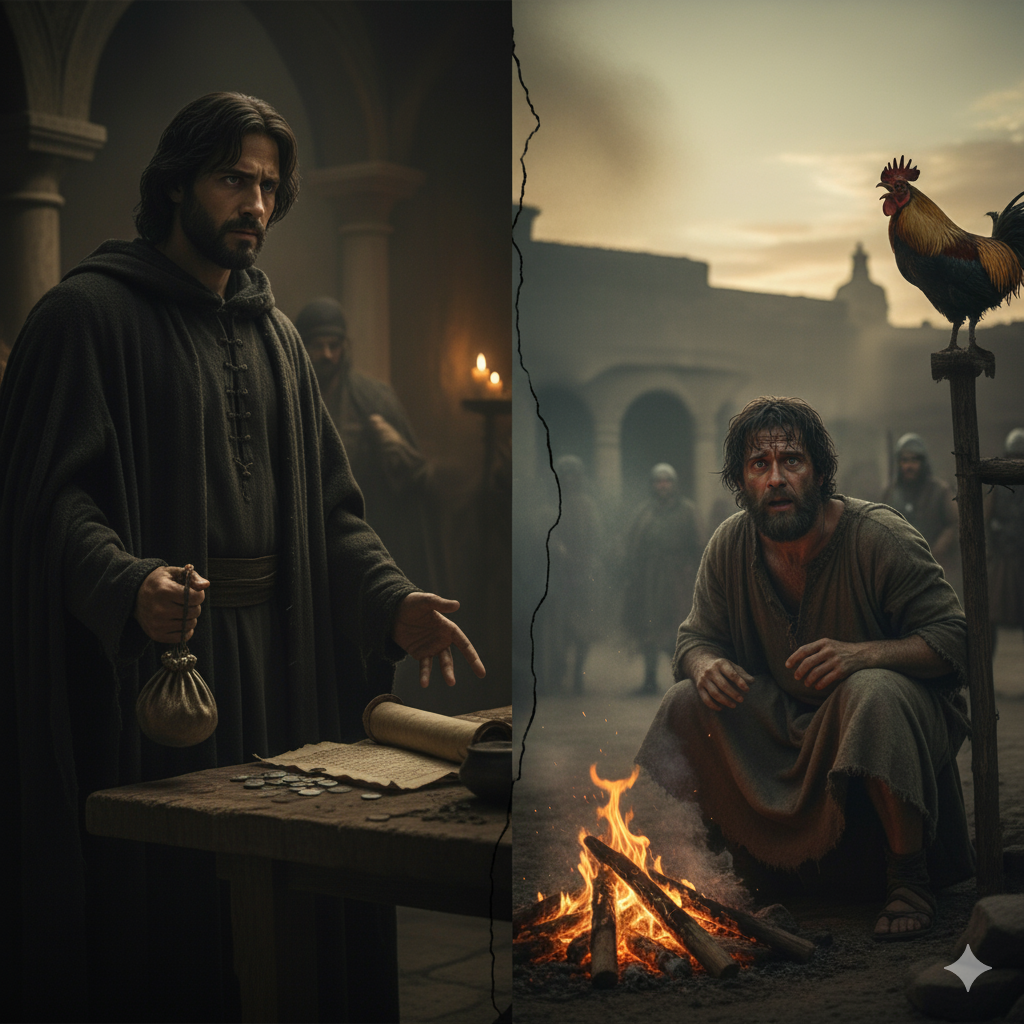
    Peter, on the other hand, is chaotic good personified. Loud, impulsive, loyal to a fault — until the pressure hits. Then fear takes the wheel. When he denied Jesus three times, it wasn’t premeditated malice; it was human panic. The man was terrified. And once the rooster crowed, he broke down. That’s the difference.

    Psychologically, Peter is your anxious avoider — the friend who disappears when you need them most but comes back crying because they know they failed you. They don’t betray out of hate; they mess up out of fear.

    Peter’s story reminds us that not everyone who hurts you meant to harm you. Some people just choke in moments that matter. But when remorse is real, restoration is possible. Jesus didn’t replace Peter — He restored him. He met him with grace, not guilt, because restoration always reveals the heart.

    How We Keep Getting It Wrong

    We confuse them all the time. We exile our Peters because they disappointed us, and we protect our Judases because they’re polite about it. We mistake manipulation for maturity. We forgive deceit but hold grudges against weakness.

    A Judas will betray you with a smile. A Peter will break your heart — and then break for you.

    But here’s the messy truth: Judases know how to apologize without changing. Peters might not know what to say, but their remorse feels like repentance. And yet we do it backwards — we keep the wrong one in our circle because we hate awkward conflict more than slow poison.

    Modern-Day Judas and Peter

    Everyday examples? Sure:

    • The coworker who flatters you to your face but rolls their eyes when you speak in meetings — Judas energy.
    • The friend who forgot your birthday and vanished for three months but came back crying and apologetic — Peter energy.
    • The partner who “just needed space” but was really creating an exit plan — Judas energy.
    • The sibling who said something cruel in anger but later called to apologize — Peter energy.

    See the difference? One plots. The other panics.

    The Call to Discernment

    Not everyone who fails you is a Judas. And not everyone who apologizes deserves another seat at your table. Grace doesn’t mean access. Forgiveness doesn’t mean reconnection. Jesus forgave Judas but didn’t chase him. He forgave Peter — and went looking for him. You don’t have to be Jesus to know what that means for you.

    The Takeaway

    Life will always give you both — a Judas to betray you and a Peter to disappoint you. Your peace depends on knowing the difference. A Judas needs to be removed — for your safety. A Peter needs to be restored — for your growth. Because Judas will sell your story for silver,
    but Peter will one day preach it back to life.

    And before you cut someone off, pause and ask yourself: Are they Judas with a bad heart… or Peter on a bad day?

    Abena

  • Death by Dinner: The Everyday Foods, Drugs, and Spices That Might Just Take You Out 

    Death by Dinner: The Everyday Foods, Drugs, and Spices That Might Just Take You Out 

    Death by Dinner: The Everyday Foods, Drugs, and Spices That Might Just Take You Out

    Death by Dinner: The Everyday Foods, Drugs, and Spices That Might Just Take You Out 

    The Innocent Killers in Your Kitchen 

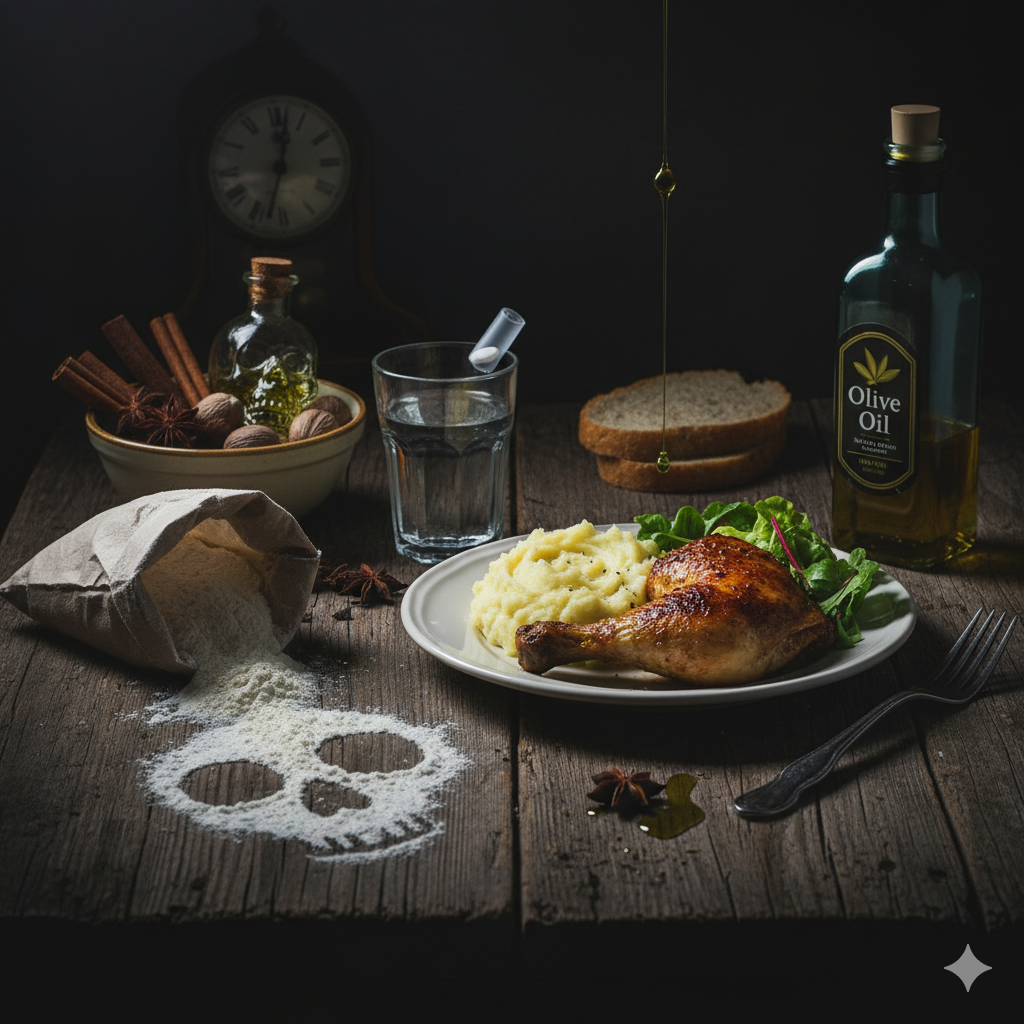
    You ever hear people say, “Everything can kill you”? No? Just me? Well, buckle up because today, we’re diving into the world of seemingly harmless foods, spices, and medications that can betray you faster than a toddler with a secret. 

    This all started when I, in my infinite wisdom, decided to pick up baking. Nothing too crazy—just a simple hobby to distract myself from my crippling addiction to staring at my phone for hours. It began with homemade pizza after visiting a friend who made it look easy. Seventeen failed doughs later (because apparently, yeast isn’t a fan of scalding water), I moved on to bread. But then my brain, which experiences food fatigue like an iPhone battery in winter, decided it was done with bread. 

    That’s when I learned something horrifying—nutmeg, a spice I had been casually tossing into baked goods, could straight-up cause hallucinations and seizures if consumed in large amounts. What else in my kitchen was a secret assassin? Turns out, a lot. Let’s talk about the foods, drugs, and spices hiding in plain sight, just waiting to ruin your day. 


    The Common Foods That Could Ruin Your Afternoon (or Life) 

    Nutmeg: Your Latte’s Little Secret 

    A sprinkle in your coffee? Fine. Two tablespoons? Congratulations, you’ve just unlocked nausea, dizziness, hallucinations, and maybe a seizure. Who knew holiday cheer could hit back so hard? 

    Grapefruit: The Medication Menace 

    A refreshing, tangy fruit—until you mix it with medication. Grapefruit can interfere with how your body processes drugs, making them either too weak or dangerously strong. That innocent breakfast might just turbocharge your blood pressure meds. 

    Cherry Pits, Apple Seeds, and Peach Pits: Tiny Cyanide Factories 

    If you’ve ever watched a true crime show, you already know cyanide is bad. These fruit seeds contain cyanogenic compounds that can turn into cyanide when consumed in large amounts. Suddenly, that apple-a-day sounds a bit risky, doesn’t it? 

    Raw Kidney Beans: Nature’s Own Food Poisoning Kit 

    Raw kidney beans contain phytohaemagglutinin, which is as fun as it sounds. Eating just a few can lead to violent nausea, vomiting, and severe stomach pain. Cooking them properly neutralizes the toxin, but who’s out here eating raw beans anyway? 

    Starfruit: The Silent Kidney Killer 

    To most people, starfruit is just a fancy garnish, but if you have kidney disease, it can be highly toxic due to its neurotoxins. It’s like a tiny, tropical betrayal. 

    Black Licorice: Nature’s Trick Candy 

    Real black licorice contains glycyrrhizin, which can lower potassium levels to a dangerous degree. If you already hate licorice, this is just further validation. 

    Rhubarb Leaves: Not Just a Fancy Pie Ingredient 

    Sure, the stalks are safe, but the leaves? They’re packed with oxalic acid, which can lead to kidney failure. So, let’s not get too experimental with rhubarb salads, okay? 

    Cassava (Manioc, Yucca): A Cyanide Trap 

    If not processed properly, cassava contains cyanogenic compounds that can release cyanide. If you love fufu or gari, don’t panic—proper preparation gets rid of the toxins. Just, you know, don’t start eating it raw like it’s a carrot. 

    Too Much Water: The Surprisingly Lethal Hydration 

    Drinking excessive water in a short period can cause hyponatremia, a condition where your brain swells due to electrolyte imbalance. Yes, you can drown yourself from the inside. Let that sink in. 


    The Medications You Probably Underestimate 

    Acetaminophen (Tylenol, Paracetamol): The Sneaky Liver Assassin 

    Harmless, right? Not quite. Slightly exceeding the recommended dose can cause irreversible liver damage. And by “irreversible,” I mean “get your affairs in order.” 

    Ibuprofen & NSAIDs: Stomach’s Worst Nightmare 

    Great for pain, terrible for your stomach lining. Overuse can lead to ulcers, kidney issues, and heart risks. If you have stomach ulcers and take these on an empty stomach—well, let’s just say thoughts and prayers. 

    Cough Syrups (Dextromethorphan, DXM): Not So Innocent 

    Normal doses? Fine. Abuse it? Now you’re looking at hallucinations, nervous system damage, and the realization that lean isn’t just a cool rap reference. 

    Antihistamines (Benadryl): The Unexpected Sleep Potion 

    A bit makes you drowsy. Too much? Congratulations, you might hallucinate or experience heart complications. 

    Nasal Sprays: The Ultimate Betrayal 

    Using nasal sprays too often leads to rebound congestion—meaning the thing meant to help you breathe actually makes you more dependent on it. Your nose is holding you hostage. 

    Sleeping Pills (Ambien): The Sleepwalker’s Delight 

    These can cause sleepwalking, hallucinations, and memory loss. Some people even sleep-eat entire meals and wake up confused. Midnight munchies, but make it dangerous. 

    Multivitamins: Yes, You Can Overdose on Those Too 

    Fat-soluble vitamins (A, D, E, K) don’t just leave your body like water-soluble ones do. Overconsumption can cause toxicity and major health issues. 


    The Spices That Could Spice Up Your Funeral 

    Cinnamon (Cassia Type): The Sneaky Liver Threat 

    Contains coumarin, which is toxic to the liver in large amounts. Also, remember the Cinnamon Challenge? Yeah, turns out inhaling cinnamon can damage your lungs. 

    Star Anise: Some Varieties Are Straight-Up Toxic 

    Japanese star anise is toxic, and even the edible kind can cause issues if overconsumed. Don’t just toss it into every dish like you’re starring in a medieval cooking show. 

    Turmeric: The Double-Edged Superfood 

    Great in small amounts, but too much can lead to kidney stones and dangerous blood-thinning effects. 

    Cloves: Eugenol Overload 

    In high amounts, cloves can cause liver damage. Clove oil? Even more dangerous. So, maybe ease up on those holiday recipes. 

    Paprika & Chili Powder: Capsaicin Chaos 

    Too much can cause heartburn, severe digestive distress, and dangerous spikes in blood pressure. Love spice? Your stomach might not. 


    Should You Panic? (No, But Maybe a Little) 

    Alright, so what did we learn today? That everything in your kitchen is secretly plotting against you? Not quite. The key takeaway is moderation. Nutmeg isn’t out to get you, but don’t go dumping tablespoons of it into your coffee. Your meds are fine—just don’t mix them with grapefruit or decide to self-prescribe. And if you see someone chomping on raw kidney beans? Maybe just back away slowly. 

    Life’s a gamble, but with a little caution (and perhaps a little less Red Bull + espresso combo at 6 AM), you’ll be just fine. Probably. 

  • The Penance of Elias Brant –  Chapter Two – The Widow and the Whispers

    The Penance of Elias Brant – Chapter Two – The Widow and the Whispers

    The Penance of Elias Brant

    Chapter 2 –The Widow and the Whispers

    Ruth Keller stood in the doorway, leaning against the frame like a woman who had seen one too many tragedies, yet survived them all with a smirk. Her left cheek bore a faint bruise, a mark that she waved at the deputy as though it were a badge of honour. “Mr. Brant?” she said, the name spat out like sour wine. “If he’s dead, maybe I can sleep with the windows open again.”

    Deputy Holt blinked, unsure whether to take her seriously. Ruth’s hands trembled—partly from some small fear, partly from the cold, and partly from the sheer drama of being questioned. He scribbled furiously in his notebook, noting her posture, her tone, her words, and the tremor that suggested the town wasn’t the only thing rattling her.

    Neighbors had already gathered, murmuring like ants on sugar. “He was watching her,” Mrs. Calloway whispered. “I told you all, that man has no sense of decency.”

    Following her to church, they say,” Old Thom piped up, leaning on the fence. “The nerve!”

    Harassing her!” Mrs. Calloway added, snapping her fingers. “Finally, someone dealt with him.”

    By the next morning, Ruth’s story had morphed three times. First, Elias Brant was merely peering at her windows; next, he was leaving notes under her door; and by noon, he was accused of acts so egregious, the local children were apparently too scandalized to play outside. The truth, like a small, delicate seed, was buried beneath layers of imagination and gossip.

    The Last Encounter

    Two nights before his death, Ruth had seen Elias at the corner of her street, pale and nervous, muttering apologies under his breath. “You have every right to despise me,” he said. Ruth had wanted to. She had wanted to scream, to curse him, to call him the town’s greatest nuisance. Instead, she left without a word, shaking her head at his earnest, almost ridiculous demeanour. The image stuck with her—the man who seemed so intent on self-destruction that he almost became a comic figure, had he not been so tragic.

    Interrogation

    Deputy Holt sat opposite Ruth at her kitchen table, notebook balanced precariously on his lap. “Did he ever… harass you?”

    Ruth laughed, short and bitter. “Harass? No. He looked at me, far too long for comfort. A gaze that counts every imperfection, every thought. Those eyes, Deputy. I swore once I’d throw a brick at him. Then I realized—he’d probably write it down and punish himself for it.

    Holt frowned. “And you never—”

    Never touched him,” Ruth interrupted, leaning back with a flourish. “Except in my imagination, which is none of anyone’s business.”

    A silence fell, heavy as damp clothes. Ruth’s story, though full of theatrics, had a truth embedded: she wasn’t a murderer, but the town had already chosen her as the prime suspect.

    The Dark Humor of Hypocrisy

    At the tavern that evening, the story had grown wings. The patrons, a mix of old farmers, retirees, and bored teenagers, sipped their ale and whispered with relish. “He followed Ruth to church!” or“No, he stole her gloves!” or “By morning, he’d ruined her reputation!”

    The tavern became a theatre of exaggeration, where Elias Brant was recast daily as a villainous stalker in a town that craved narrative closure. Ruth, meanwhile, occupied a strange liminal space: both victim and participant in a gossip-fueled morality play.

    Journal Fragment

    I lingered too long again. Looked when I should have looked away. Eyes betray me. The flesh betrays me. Five lashes for the gaze, five more for the thought. I must learn control, or be consumed.

    The fragment, discovered later, would serve as the first real glimpse into Elias’s private obsession: a meticulously cataloged self-punishment ritual, borne not of cruelty from others, but from his own conscience.

    Reflection

    By the week’s end, the town had decided Ruth was the innocent, and Elias the monster. Holt, however, had begun to see cracks in the narrative. There was something more in the field than violence by another; something obsessive, meticulous, personal. The journal fragment hinted at a man punishing himself far beyond reason.

    Somewhere, in the quiet of her home, Ruth reflected on her luck. She had survived the gossip storm, the accusations, the imagined threats. The town believed Elias was evil; she believed he was broken. And in a way, both were correct.

    Meanwhile, the field remained quiet, wet, and perfumed with the scent of rust and rain. No one spoke of who had done it—because, strangely, no one had.

  • The Penance of Elias Brant –  Chapter One – The Body in the Field

    The Penance of Elias Brant – Chapter One – The Body in the Field

    The Penance of Elias Brant

    Chapter 1 – The Body in the Field

    Cape View Island was small enough to make a postage stamp blush, perched on the jagged coast of Soaba. Ninety-seven residents, three roosters, and one island-wide secret: everybody knew everything about everyone, but nobody left. The ferry ran once a day, and even then, only if the wind deigned to cooperate. Most people got around by bike or on foot. The Catholics, numbering ninety-one, worshipped devoutly at the church in the center of town. Elias Brant did not. Not entirely. He went to Mass at strange hours, when no one else could see him—his own personal confession booth in an empty pew.

    It was Mrs. Calloway’s niece who first noticed the figure in the barley field. “Is that…?” she squinted, shoving her uncle aside.

    Yes,” said her uncle, more certain than anyone wanted to be. “It’s him.”

    Elias Brant was curled in the grass like an overstuffed Christmas turkey, shirt stiff with blood, skin mottled with welts that spoke of deliberate cruelty. The rain had softened into a drizzle, turning the field into a patchwork quilt of mud and rust.

    Deputy Holt pedalled furiously to the scene, chain clanking, lungs burning. “What the hell—” he muttered, eyes scanning the damage. “Someone hated this man.”

    From the fence line, neighbours gathered. Old Mrs. Calloway, with her orthopedic boots and half a hearing aid, peered over the fence. “Whoever did this ought to get a medal,” she said. No one disagreed. The town had been waiting for this moment for years. Elias was a black hole of gossip, a man who made everyone else feel morally superior by comparison.

    The sheriff arrived, face pale under his wide-brimmed hat. “Murder,” he said, surveying the welts and cuts with grim authority. “No doubt about it. Looks… ritualistic.”

    And the town nodded. Murder, finally, was neat. Murder allowed gossip to breathe. Murder allowed judgment to be passed in proper public form. Murder was catharsis.

    Interrogations Begin

    By the afternoon, the town hall was buzzing with suspicion. Deputy Holt started with the obvious: Mrs. Calloway herself.

    “Did you see anything?” he asked.

    Only that Elias Brant got what was coming to him,” she replied with a sniff, clutching a thermos of coffee like it was a weapon. “I’ve been warning the town about that man since before your father was born.”

    Holt scribbled in his notebook. The next person, Tommy Pritchard, claimed Elias stole his cat, or maybe just stared at it too long. By the end of the day, everyone had a story, and all the stories confirmed one thing: Elias Brant was a terrible human being—and somebody finally took care of it.

    Flashbacks

    Elias’ ex-wife lived on the other side of the island with their twins Maizie and Kari, who never saw him. The town had long ago exiled him socially, and he existed mostly in rumor. Sometimes he’d appear at the store, muttering about taxes, stolen bread, or the moral failings of the bakery clerk.

    Neighbors remembered moments small and absurd such as Elias giving a stray dog a stern talking-to for “chewing improperly.” And Elias counting coins at the market, muttering, “Five lies today. Five lashes.”

    And always, always, his eyes; they were wide, earnest, and just a little accusatory.

    Fragment from Elias’s Journal

    Tuesday, 11:42 p.m. – I lied again today. A small thing—said I was busy when I was not. Small lies rot the soul. I owed ten lashes. I gave myself twelve, just to be sure.

    By the evening, gossip had metastasized. At the tavern: “He was stalking Ruth Keller.” , “No, he stole lumber from Jonah Pike.” ,  “I heard he had an affair with the preacher’s daughter, though no one can confirm.”

    All plausible. Nontrue—or at least, none exactly as told. The town thrived on speculation, and speculation had finally found a body to chew on.

    The Deputy’s Observation

    Deputy Holt leaned against the wall, noting the faces. “Everyone hated him,” he muttered. “And yet… nobody killed him. Or did they?”

    The thought lingered, curling through the tavern like smoke. Even the mayor, a man who claimed to detest gossip, couldn’t help whispering, “Good riddance.”

    It seemed, for a moment, that Cape View Island had finally restored moral order. And then Holt noticed something—a small notebook sticking out of Elias’s coat pocket.

    The pages were damp, ink smeared and written in a meticulous hand: columns of sins, punishments, times, and tallies. Each wound in his body had been accounted for.

    The town, in its impatience for justice, had misread everything. And Holt, tired and soaked, could only mutter:

    No one killed him… not exactly.”

  • Lucky Number Heaven: Why 7 Is the Most Powerful in Biblical Numerology

    Lucky Number Heaven: Why 7 Is the Most Powerful in Biblical Numerology

    Dearly Beloved, We Are Gathered Here Today to Talk About… Numbers?

    I’ve been knee-deep in a numeric rabbit hole lately—an obsessive, caffeine-fueled journey through the spiritual lives of the numbers 3, 4, 5, 6, 7, 9, 12, and 40. Yep, numbers. Not exactly the love triangle from Bridgerton, but believe me, the drama is real. I’ve trawled through Christianity, mythology, the universe (you know, casually), and even peeped into other religions for context. Then—just when I thought I could rest like God on Day 7—a friend hit me with The Question: “So which number is the most powerful in Christianity?”

    Excuse me? Ma’am. Sir. That’s like asking a mother to choose between her kids. Or a millennial to pick a favorite 90s jam. But fine, since we’re already playing God’s accountant, let’s weigh them—spiritually, symbolically, and with just the right sprinkle of sass.

    In the Beginning… There Was 7 (And It Was Good. Very Good.)

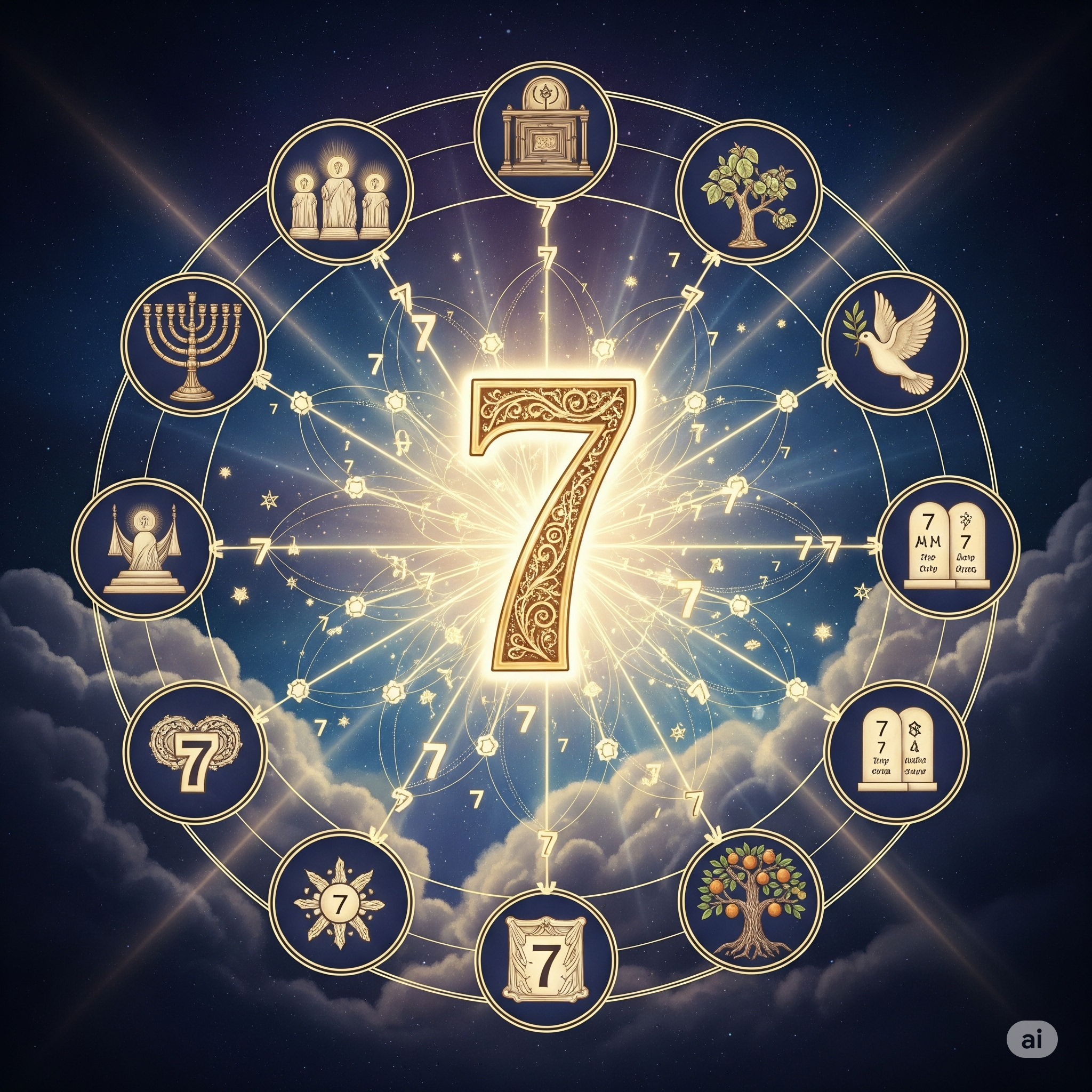
    Now listen, it’s not easy picking just one number to rule them all, but if I had to choose the biblical heavyweight champ, it’s gotta be 7. Not because it sounds cool (although it does), but because it’s the gold standard of divine symbolism.

    Here’s the thing, 7 is the number of divine perfection and completion. God made the world in six days, then took Day Seven off to vibe and rest, blessing it into the holy Sabbath. That right there established the very concept of sacred rest. And if you’ve ever worked a full week without a break, you know Sabbath isn’t just biblical—it’s survival.

    But 7 doesn’t stop at creation. Oh no, it moonwalks through Scripture like it owns the place. We’ve got:

    • Seven churches,
    • Seven seals,
    • Seven trumpets,
    • Seven spirits… all of them dropping bars in Revelation like a holy mixtape.

    Even in the Old Testament, Joshua and the Israelites did a holy parade, circling Jericho seven times before the walls crumbled like bad Jenga. And don’t forget Naaman, who dipped in the Jordan seven times to get healed like he was doing a prophetic spa treatment.

    But wait, there’s more! Let’s whip out some spiritual arithmetic. The number 3 represents the Trinity (Father, Son, Holy Spirit), while 4 stands for the earthly realm (four corners of the earth, four winds). Put them together? Boom: 3 + 4 = 7. A beautiful fusion of heaven and earth. A divine merger. A spiritual power couple.

    Let’s Talk About the Rest of the Class (Bless Their Hearts)

    Don’t get all defensive if 7’s not your ride-or-die. I get it; loyalty is cute. But let’s be real for a minute and talk about the rest of the contenders.

    3 is sacred, no doubt. The Trinity is theology’s golden trio. But 3 is more of a foundational number than a power broker. Think of it as the architect, not the king.

    4 symbolizes the earth: structure, stability, groundedness. You know, GPS vibes. But “powerful”? Not quite. It’s the brick, not the builder.

    5 gives grace. Five loaves. Five-fold ministry. Lovely stuff. But it doesn’t flex much symbolic muscle in the grand scheme. More Sunday School, less Spiritual CEO.

    6… Oh, 6. The poor, misunderstood middle child. Biblically, it represents man, one short of perfection. And when it leans evil (hello, 666), it’s giving a “villain origin story.”

    9 brings finality and judgment. The 9 fruits of the Spirit. The 9 gifts. It’s important, sure. But it feels more like a well-behaved class monitor than the ruling monarch of divine meaning.

    12 could’ve fooled us all. With 12 tribes of Israel and 12 apostles, it screams governance. It’s big on structure, leadership, and divine order. But raw power? Nah. It’s the Parliament, not the throne.

    40 shows up during transformation bootcamps: 40 days of rain, 40 years in the wilderness, 40 days of Jesus fasting. It’s deeply spiritual and all about testing, but it symbolizes process, not power. Think of it as the rocky training montage, not the championship belt.

    So, Who’s Your Daddy? (Spoiler: It’s 7)

    All numbers considered, 7 walks away with the crown, the sceptre, and the holy fanbase. It’s in the DNA of creation. It threads through prophecy, ceremony, and apocalypse. It balances heaven and earth in one clean, perfect digit. It’s biblical royalty—the Zeus of numbers.

    And if you still want to root for 12 because it feels more official, or side-eye 3 because it’s your spiritual bae, go ahead. I won’t judge. But deep down, even your inner theologian knows that 7 reigns supreme.

    Holy Math and Mic Drops

    So, there you have it: a case for the divine MVP of numerology. 7 is not just a number; it’s a narrative, a message, a mic-drop moment wrapped in holy significance. And now that we’ve settled that, go forth and pay attention to where 7 pops up next. In your Bible. In your week. In your life.

    Because when heaven counts, it counts to seven.

    Sabbatically yours,
    Abena, the Numerologically Enlightened

  • The Caregiver Chronicles: How to Serve Karma with a Side of Love

    The Caregiver Chronicles: How to Serve Karma with a Side of Love

    The Caregiver Chronicles: How to Serve Karma with a Side of Love

    Life is a series of cycles. We hear all these theories—developmental stages, sociological frameworks, biological aging charts—and somewhere in between, people throw in their own spin like it’s a potluck dinner. Some of these theories make perfect sense. Others make you tilt your head like a confused puppy. But one that stuck with me recently is the three-stage cycle of parent-child relationships.

    It’s simple. Almost too simple.


    Stage One: The Tyrant Reigns

    This is the dictatorship phase. Parents (or caregivers, because not everyone had the standard-issue parental unit) make the rules, enforce them with the enthusiasm of a drill sergeant, and expect total compliance. Here, love and fear often get tangled up like last season’s Christmas lights. Many caregivers believe that to be feared is to be respected, and let’s just say some of them majored in Fear Studies with a minor in Yelling.

    For some, this stage is a loving, warm experience. It’s a time when rules are law, bedtime is non-negotiable, and broccoli is somehow considered a “treat.” For others, it’s a boot camp where questioning authority is punishable by The Look™—you know, the one that makes you reconsider all your life choices.

    Here’s The Kicker: caregivers hold all the power. They’re the CEOs of the household, the rule-makers, the snack-distributors, and—if they’re feeling spicy—the occasional enforcers of “tough love.” But here’s where it gets tricky. Some caregivers confuse “tough love” with “let’s traumatize the kid for funsies.” Fear becomes their currency. “Respect me, or else!” they bark, not realizing that respect and fear are about as similar as a hug and a headlock


    Stage Two: The Rebellion (or “I’m an Adult, I Swear!”)

     Adulthood arrives, and suddenly, the child-turned-adult is in the driver’s seat. They pay their own bills, make their own choices, and take their parents’ advice like it’s a coupon—nice to have, but optional. The power dynamic shifts. Some parents struggle with this, suddenly realizing they’re guests in their child’s life instead of landlords.

    But Here’s The Twist: this stage is where the seeds of karma are planted. How the caregiver treated the child in Stage One will determine how the child treats the caregiver in Stage Three. It’s like a cosmic game of Sims, except you can’t just delete the pool ladder if things go south.

    And then comes the pièce de résistance


    Stage Three: The Full Circle Revenge Tour.

    This is where things get interesting. The child is now responsible not only for their own life but also for the parent’s. And guess what? They’re about to return the favor. You raised them with distance? Expect the same. You raised them with warmth? They’ll probably keep calling just to ask if you ate. It’s like a karmic boomerang—you throw it, and years later, it comes back, except now it’s wearing orthopedic shoes.

    But Here’s The Kicker: not everyone gets a happy ending. Some caregivers are shocked—shocked! —when their adult children don’t want to spend time with them. “Why don’t you call me more often?” they whine, conveniently forgetting the years they spent yelling, “Because I said so!” Meanwhile, others enjoy a beautiful, loving relationship with their adult children, built on a foundation of mutual respect and the occasional guilt trip. (“You haven’t called me in three days. I could’ve been dead for all you know!”)

    We’re All Just Making This Up as We Go

    Take me, for example. I didn’t really grasp how real this was until I examined my own relationship with my parents. I’m pushing 40 (yes, I’m ancient, thank you for asking), and I still get questioned about how often I call my folks and to answer is we call each other multiple times a day. Why you might ask? Because they taught me that love is spelled T-I-M-E. when I was growing up ( I am still growing though), my dad never missed my calls. Ever. No matter what he was doing, if I called, he’d answer with, “Is it an emergency, or can it wait?”

    If it was an emergency, he handled it. If not, he’d politely tell me he was busy. Simple. Efficient.

    Meanwhile, my mother called me multiple times a day, just to check if I’d eaten. Didn’t matter that I was a full-grown adult—I could be mid-bite, and she’d still ask. They live together, yet I call them on separate lines because, for most of my life, they lived in different countries. My mother, in particular, takes offense if you call my dad’s phone and ask for her. “I have my own phone, I will call you myself.” And she will. Repeatedly.

    And that is exactly why I refuse to accept anything less. Nobody—and I mean nobody—is that busy. The first people who taught me what love looks like always made time for me, so why would I settle for less from anyone else? Love isn’t just words; it’s time, patience, and effort.

    So, side note: If someone claims they’re too busy to return a call, reply to a text, or show up once in a while… do yourself a favor and pack it up like leftovers at a bad dinner. Time to hang it up and let them be busy somewhere far, far away.

    The Social Shock

    I grew up thinking this was the norm until I met people whose parents would rather send a smoke signal than pick up the phone. Turns out, relationships with caregivers vary wildly. Some kids had caregivers who left them to fend for themselves, so as adults, they don’t have much reason to call. Others only stay in touch out of cultural obligation. Some were raised in homes where love was served daily, while others had to scavenge for scraps of affection.

    And then there’s food. And let’s not forget the food wars. Oh yes, the food. In some households, dinner is a battleground. “You’ll eat what I cook, or you’ll starve!” declares the caregiver. No negotiations as if hunger is a character-building exercise. Meanwhile, in other homes (shoutout to my fellow picky eaters), My parents accommodated me. They were out her whipping up separate meals. Spoiled? Maybe. Loved? Absolutely. I call it strategy, just to make sure little Abena doesn’t faint from malnutrition.

    If I wouldn’t eat it, they didn’t force it. This baffled some people who believed suffering builds endurance & character; nonsense, complete rubbish. Does forcing a child to eat boiled yam really make them a better person? Or just someone with trust issues?

    Another social shock? The “if you’re late, we’re leaving you” philosophy. Now, I get it—resources are limited. But maybe, just maybe, there’s a way to communicate that without making a child feel like they’re one tardy away from exile.


    The Real Kicker Is This: We Don’t Even Have The Same Caregivers.

    Siblings (which I don’t have, so I just observe like a scientist) experience different versions of the same parent. Your older sibling might’ve had a strict, no-nonsense parent, while the youngest gets a caregiver who suddenly discovered patience. Same parent, different versions. So, when your sibling vents about how unfair their experience was, maybe give them a little grace.

    Most of us are creeping toward Stage Three, where our caregivers will eventually need us. Some are already there, navigating the tricky waters of balancing their lives while looking out for aging parents. Others are just stepping into Stage One, starting the whole cycle anew.

    I don’t have kids (yet), so I won’t pretend to be an expert on parenting. But after studying Sociology and Behavioral Science, I know this much: We can take the good from our upbringing, leave the bad, and remix it into something better. No childhood is perfect. But being intentional about the relationships we build—especially the ones we’ll depend on later—is the real game-changer.

    So when my turn comes, I hope my future kids will have an upgraded version of the relationship I had with my parents. And if they call me just to ask if I’ve eaten, I’ll know I did something right.


    Remember: Karma Is a Caregiver

    So, what’s the takeaway from this three-act play? Simple: treat your kids (or your future kids) the way you want to be treated when you’re old and gray. Because one day, the tables will turn, and you’ll be the one eating oatmeal while your adult child lectures you about fiber intake.

    And to all the caregivers out there: love your kids. Feed them (even if it’s separate meals). Answer their calls. Show up for them. Because one day, they’ll be the ones showing up for you. And if you’re lucky, they’ll bring dessert.

  • You Could Be Right… But You Should Shut Up: The Hidden Power of Model Auxiliary Verbs

    You Could Be Right… But You Should Shut Up: The Hidden Power of Model Auxiliary Verbs

    You Could Be Right… But You Should Shut Up: The Hidden Power of Model Auxiliary Verbs

    Introduction:Grammar: The Weapon You Didn’t Know Was Loaded

    Look. I’m not here to give you PTSD flashbacks of your high school English teacher yelling about dangling participles and passive voice. Frankly, I’ve barely recovered myself. After years of being emotionally battered by things like the past perfect continuous and subject-verb agreement, the last thing I thought I’d ever write about was grammar. Yet here I am—because something wild happened at Home Depot. And because I realized that model auxiliary verbs (or MAVs for short) might actually be the silent assassins of the English language.

    They’re not just grammar tools. They are the tiny, innocent-looking words that can turn a sweet suggestion into a marital argument or downgrade a murder charge into manslaughter.
    Yes. It’s that serious.

    What the MAV?

    Let’s start at the very beginning—because if you’re like me, the only models you care about are the ones on runways or in LEGO boxes. So, what are Model Auxiliary Verbs?

    They’re those little helpers that sneak into sentences and change the entire meaning of what you’re trying to say. They include words like can, could, may, might, should, shall, will, would, must, and ought to. Most of us toss them around in everyday speech without thinking. But if you actually stop and break down a sentence with one of these babies in it, the whole vibe changes depending on which one you use.

    I’m talking relationship-changing, court-verdict-shifting levels of power.

    The Home Depot Saga: A Tile, A Verb, A Fight Waiting to Happen

    So, picture this: I’m in Home Depot, minding my business, probably lost in the paint aisle because that’s where I go to avoid real responsibilities. I overhear a couple looking at tiles for their bathroom renovation. The wife holds up this chic, Pinterest-worthy tile and says,
    “We should get this one. I love it.”

    Her husband, very much not picking up on the urgency, says:
    “You could if you want to.”

    Now, to the untrained ear, that sounds harmless. Sweet, even. Like he’s giving her free will. But to someone like me—who breaks down every sentence in real-time like I’m decoding CIA intel—that was an emotional landmine.

    Her use of should implied a strong suggestion, a joint decision. A “we’re in this together” moment. His could, on the other hand, screamed optional. Detached. Indifferent.
    In other words, “Pick whatever, I don’t really care.”

    And folks, if there’s one person on this earth you shouldn’t be indifferent toward, it’s the woman holding a tile and your future bathroom aesthetics in her hands. The tension snapped like a brittle laminate plank. She hit him back with:
    “It would be nice if you would be supportive and just pick one.”

    Boom. That’s how grammar breaks homes.

    Grammar That Gets You Off (In Court, Not Like That)

    You’re probably still laughing, thinking I’m exaggerating. So let’s take it up a notch. Court cases. Real ones. Decided by Model. Freaking. Auxiliary. Verbs.

    In 2006, in Newfoundland, a woman named Mary was acquitted of criminal negligence causing death. Why? Because her defense hinged on one MAV:
    She said she thought the shadow could have been a bear—not a person.
    Not wouldcould.

    That one-word shift changed her actions from intentional to accidental. The court agreed. No mens rea (aka guilty mind), no murder. The grammar saved her.

    Another case? A father in Calgary was charged after shaking and throwing his three-month-old baby (don’t even get me started). He wasn’t convicted of murder, though—just manslaughter. Why? Because he claimed he didn’t realize his actions could result in death.
    Not wouldcould.

    Again, that seemingly insignificant verb spelled the difference between a murder charge and something far less severe. Grammar saved his sorry ass.

    Why It Might Matter More Than You Think

    Here’s the kicker. Most of us speak on autopilot. We throw out sentences like spaghetti at a wall, hoping meaning sticks. But MAVs are sneaky. They quietly reroute the entire message you’re trying to convey. They add doubt, certainty, permission, obligation—all the spicy little undercurrents of language.

    So next time you’re saying something important—especially to a spouse, a lawyer, or a judge—stop and think. Do you mean could… or should? Might… or must? Would… or will?

    Because could gets you killed, should gets you divorced, and would might just get you acquitted.

    Conclusion: May the MAVs Be Ever in Your Favour

    So, dear reader, what have we learned today? That grammar isn’t just about sounding smart in emails or bullying people on Reddit. It’s about survival. Your choice of MAV can start a fight, end a relationship, or beat a charge.

    Do I sound dramatic? Maybe. But would I be lying? Absolutely not.

    So go forth. Speak wisely. And for the love of your freedom, your marriage, and your home decor—choose your auxiliary verbs like your life depends on it.

    Because, as you now know…
    It just might.

  • Holy Pilates and Heavenly Stockbrokers: A Catholic Kid vs. The Prosperity Gospel

    Holy Pilates and Heavenly Stockbrokers: A Catholic Kid vs. The Prosperity Gospel

    Holy Pilates and Heavenly Stockbrokers

    If you grew up Catholic like me, you didn’t just worship—you worked out. Mass was basically liturgical cardio. Stand. Sit. Kneel. Stand again. Back down. Up again. Repeat until your thighs are screaming like you’ve joined a bootcamp run by the Holy Spirit. And heaven forbid it was Christmas or Easter, when Mass doubled up—you’d leave with faith in your soul and quads of steel. Who needs a gym membership when three consecutive Catholic funerals will sculpt you like a medieval gladiator?

    That was my training ground for faith: solemn hymns sung slightly off-key, statues that looked perennially disappointed in your life choices, and priests so humble their entire wardrobe could fit in a duffle bag. In Catholic culture, prosperity was never flashy. It meant having enough money to light candles for your intentions and maybe squeeze in brunch after Mass. Your “breakthrough” was usually just your 1995 Corolla making it through another Canadian winter.

    So, you can imagine my complete bewilderment when I stumbled across something called the Prosperity Gospel. At first, I honestly thought it was one of the missing books of the Bible that had been edited out, like The Gospel According to Uncle Benny. But no—it’s actually a shiny, theatrical brand of Christianity that rebrands Jesus as CEO of a cosmic bank. Its motto? Name it, claim it, and don’t forget to sow your seed (in cash, preferably in large denominations).


    Catholic Tithing vs. Prosperity Tithing

    Here’s how money works in the Catholic world. You discreetly drop a few small bills in the basket as it passes by, avoiding eye contact like you’re making a shady deal in an alley. That money “goes to the church,” which is code for candles, altar bread, and making sure Father Boamah doesn’t have to drink instant coffee. The return on your spiritual investment? Subtle. Your prayers answered, your family intact, maybe your radiator doesn’t die in January.

    Now, let’s cross over to Prosperity Gospel territory. Here, you don’t give—you invest. You don’t tithe—you build a portfolio with God, your heavenly stockbroker. And the expectation is loud: cars, houses, designer clothes, miraculous debt cancellation. If you’re not living like a Kardashian for Christ, the implication is that something must be wrong with your faith. Oh, and don’t be stingy. Rent money in the offering plate? Perfect—your “breakthrough” is apparently just around the corner.


    Why Prosperity Gospel Feels Like a Netflix Special

    I’ll admit it: the appeal is obvious. The music slaps, the stage lights rival Coachella, and the pastors deliver sermons like motivational TED Talks with Bible verses sprinkled in. The faith pitch is irresistible in its simplicity. Give money, get more back. Pray this prayer, debt disappears. Clap three times and spin around, and your runaway husband returns home—this time with groceries.

    Meanwhile, Catholic sermons sound more like: “Offer up your suffering. Life is hard. Heaven will be worth it.” Let’s be real—that’s not exactly a binge-worthy sales pitch.


    The Problem With the Promise

    But here’s the rub: Prosperity Gospel offers certainty in a world that craves it desperately. It’s tidy. Transactional. Almost contractual. Except it’s built on a foundation as shaky as a folding chair at a church potluck. The actual Gospels literally say things like, “Blessed are the poor in spirit.” Prosperity preachers, on the other hand, are out here like, “Blessed are the rich in sneakers.”

    And we all know who really prospers here: the folks with the microphone. The same preachers urging you to sow your “sacrificial seed” are often the ones flying private jets, rocking $5,000 suits, and driving cars that would make Jesus squint suspiciously.


    Catholic Skepticism vs. Prosperity Optimism

    As someone raised Catholic, I can’t help but squint at the promises. We’re the religion of guilt, incense, and long-term investments. We don’t leap, dance, or shout “Amen!” every five seconds. We mutter, we cross ourselves, we zone out halfway through the Nicene Creed and pretend we didn’t.

    So, when I watch prosperity preachers dancing on stage, convincing thousands that their “miracle” is just one tithe away, my inner Catholic auntie instantly materializes, arms folded, eyebrow raised: “Mmm… we don’t do things like that here.”


    So Where Do I Stand?

    Somewhere in the uncomfortable middle. Prosperity Gospel takes things too far—it reduces God to a vending machine where you insert tithe and expect blessings to drop out. But Catholicism sometimes leans too heavily in the opposite direction, as though holiness equals permanent suffering. There has to be something in between.

    Maybe prosperity isn’t about money or misery. Maybe it’s about wholeness. Peace, stability, joy, good relationships, and yes, even a car that starts reliably in subzero weather. God doesn’t need your money—but your church definitely does. Giving should come from gratitude and generosity, not from trying to strong-arm the Almighty into becoming your personal financial advisor.


    Final Benediction

    Prosperity Gospel says, “God wants you rich.”
    Catholicism says: “God wants you holy (and broke, but holy).”
    But maybe the real gospel is simpler. God wants you free. Free from greed, free from fear, free from the kind of thinking that treats Him like a cosmic ATM.

    And if that freedom comes from kneeling until your legs go numb or skipping a latte to help your neighbour pay rent, maybe that’s the kind of prosperity worth chasing. After all, sainthood doesn’t come with stock options—but it might just come with peace.


    .

  • The Fascinating and Quirky World of Forty: From Mythology to Science

    The Fascinating and Quirky World of Forty: From Mythology to Science

    The Fascinating and Quirky World of Forty

    Have you ever wondered about the significance of the number Forty? Sure, it might seem like just another number, but when you start to dig into it, Forty seems to pop up all over the place—from ancient religions to modern-day life. It’s like the number Forty is just out there living its best life, representing everything from personal growth to global phenomena, and I just can’t help but get excited about it. So, let’s take a humorous yet deep dive into the wonders of Forty, exploring how it shows up in different cultures, philosophies, and even the natural world. Trust me, this is a number you’ll want to pay attention to.

    The Many Faces of Forty in Religion and Mythology

    You know how everyone talks about the “Big Forty” in the Bible? Well, the number Forty doesn’t just make a cameo in Christianity. It’s everywhere in religion, almost like it’s got its own VIP pass.

    In Islam, Forty has a powerful connection to spiritual milestones. For instance, the Prophet Muhammad received his first revelation at the Age of Forty—imagine hitting that age and becoming the spiritual face of an entire religion. That’s some serious life goals right there. Additionally, many Muslim cultures observe a Forty Days of Mourning period after someone passes, which signifies a period of transformation for the soul. It’s like an extended timeout for the soul to, well, figure things out.

    Now, let’s talk about Judaism—because Forty Days just seem to be a thing in this part of the world. Moses spent a solid Forty Days and Nights on Mount Sinai fasting and receiving divine wisdom. That’s some serious dedication. The Israelites, too, wandered the desert for Forty Years—yes, you read that right, Forty Years—in search of the Promised Land. That’s a lot of dust and sand, but hey, sometimes, we all need to wander for a bit, right? Oh, and did you know that a traditional ritual bath in Judaism must contain Forty “Se’ah” Of Water? That’s a lot of water—probably more than I’d care to swim in.

    Hinduism also gives Forty its due respect. Many religious observances require Forty Days of Fasting, prayer, and even pilgrimages, like the famous Sabarimala Pilgrimage. It’s as if Forty is a magical number for spiritual transformation. In some Vedic scriptures, Forty Days are linked to planetary transitions and major life changes. Forty seems to be the number of changes, growth, and—well—just a whole lot of commitment.

    And we can’t leave out Buddhism. Legend has it that Buddha spent Forty Days Meditating under the Bodhi tree before attaining enlightenment. Forty Days of Sitting Still and thinking deeply about life. My legs ache just thinking about it, but it’s still inspiring, right?

    Forty in the Mystical and the Ancient

    Okay, so we’ve covered the spiritual side of Forty, but let’s get a little mystical and dive into some ancient mythologies. The ancient Egyptians took Forty very seriously, especially when it came to preparing the dead for the afterlife. The embalming process took Forty days—just think about that level of attention to detail. There was also a FortyDay Mourning period before the final funeral rites. You could say Forty is their way of making sure the afterlife isn’t rushed. Nice touch, Egypt.

    Over in ancient Persia, the Zoroastrians believed that the soul journeyed for Forty days after death before reaching the afterlife. It’s like a little vacation for the soul before it heads to its final destination. Can’t blame it; I’d need a little time to unwind, too.

    Forty: A Phenomenon in Nature and Science

    Alright, let’s get a bit nerdy. Forty’s not just for philosophers and spiritual seekers; even science and nature give it a shout-out. A full-term human pregnancy lasts about Forty weeks. Yeah, that’s right—nine months. Forty weeks of anticipation, growing, and preparing to welcome a tiny human into the world. And don’t even get me started on how Forty days might be the sweet spot for skin cells to regenerate—just think about how many new layers of skin you could grow in that time! Science is wild.

    There’s more! In astronomy, Venus and Earth interact in a fascinating way every Forty days. It’s like the planets are playing a cosmic game of tag. Forty is apparently the number for planetary dynamics. Who knew?

    And here’s a fun one for you: Some meteorological models suggest that weather patterns experience Forty-year cycles. So, if you’ve ever wondered why we get funky weather every now and then, just blame it on the Forty-year reset. It’s nature’s way of keeping us on our toes.

    Forty in Philosophy and Culture

    The great philosopher Aristotle believed that we reach our peak intellectual and moral wisdom at the age of Forty. So, if you’re staring down the big four-oh and wondering if it’s too late to get wise, relax—according to Aristotle, it’s your time to shine. In Ancient Greece, Forty was also seen as the number that signified completion, especially in mathematical sequences. I like to think of it as nature’s way of saying, “You’ve done well; here’s your reward.

    And in Literature, Forty has its own fan club too. Who can forget the tale of Ali Baba and the Forty Thieves? Forty Thieves, each with their own quirky personalities, making the number Forty synonymous with challenge and triumph in folklore. That story alone should make you think twice about the power of Forty.

    Forty in Our Daily Lives: A Number That Won’t Quit

    The number Forty has snuck its way into our daily lives, often without us even realizing it. Ever worked a FortyHour Week? That’s right, the standard workweek is Forty Hours. Whether we like it or not, Forty Hours is the magic number for productivity. On the temperature scale, 40°Celsius and -40° Celsius are extreme points. I mean, if you’ve ever been in Russia or Canada, you’ve probably experienced both ends of that spectrum.

    And let’s not forget that Forty is also the number that many cultures associate with the start of middle age. It’s the big shift where life gets more introspective and you start to wonder if you’ve reached the pinnacle of your wisdom—hopefully, Aristotle was right.


    Forty, The Mighty Number

    So, what have we learned about Forty? It’s a number that appears almost everywhere, from ancient mythologies to modern science. It’s a number that signifies change, growth, challenge, and completion. Forty is a reminder that life is full of cycles and transformations, whether in the spiritual world, the natural world, or even in your own personal growth. As we see, it’s not just a number—it’s an experience. So, the next time you hit Forty (or even the next time you see a Forty on a temperature scale), remember: it’s not just about the number—it’s about what it represents. And if you’re like me, you’ll probably think, “Wow, Forty is pretty cool.