Category: Thinkery

  • Lent 2026: 40 Days of Reflection, Fasting, and Slightly Ridiculous Challenges

    Lent 2026: 40 Days of Reflection, Fasting, and Slightly Ridiculous Challenges

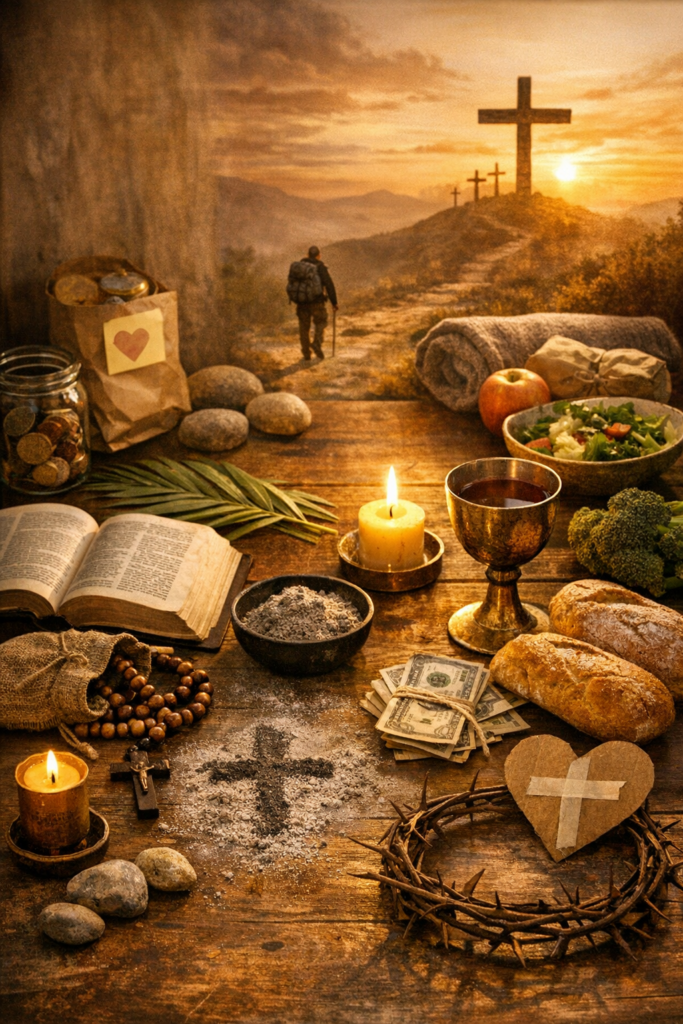
    A Witty Guide to Surviving, Thriving, and Maybe Laughing Through Lent

    Hi guys, welcome back! Yes, I know, you’re reading this instead of scrolling TikTok or YouTube—trust me, I need to get off too. But here we are, ready to dive into another Lent write-up. Last year was… chaotic. My brain went through withdrawal. But somehow, we survived. And this year? We’re back. Stronger. Wiser. Slightly hungrier.

    Do I want to go over the basics of what Lent is again? Nah, you can check my previous post for that. Instead, I’m bringing you 40 days of intentional, fun, and sometimes slightly ridiculous Lent challenges. Think of it as a spiritual bootcamp, but with fewer push-ups and more chocolate avoidance.

    Lent 101: Quick Refresher (Because You’re Probably Side-Eyeing Me Already)

    Ah, Lent. That curious season where Catholics, Orthodox Christians, Anglicans, Lutherans, and other liturgical folk decide it’s time to get spiritual, reflective, and occasionally hangry. It’s a 40-day stretch before Easter—think of it as a spiritual detox with prayer instead of push-ups and fasting instead of burpees.

    Why 40 days? Apparently, God really likes a good metaphor. Jesus spent 40 days in the desert fasting, praying, and ignoring all heavenly Wi-Fi temptations (Matthew 4:1-11). Moses spent 40 days on Mount Sinai (Exodus 34:28). Elijah spent 40 days trekking to Mount Horeb (1 Kings 19:8). Forty is basically a spiritual code for: get serious, reflect, maybe suffer a little, and hopefully grow. I might write on the number Forty later in the year.

    Fasting isn’t just skipping chocolate—though yes, chocolate counts—it’s about creating space for God, self-reflection, and seeing what really matters. Prayer can be spontaneous (“Dear God, why is this happening?!”) or structured (Rosary, written prayers, Liturgy of the Hours). Almsgiving? That’s fancy Christian speak for generosity—giving time, love, or resources so you don’t end up as a self-centred hermit.

    And yes, Sundays don’t count in the 40 days, so Lent is technically 48 days. The Roman Catholic and Eastern Orthodox Christians are the most structured with traditional fasting; Anglicans, Lutherans, and Methodists focus more on reflection or voluntary fasts. The goal? Choose something meaningful to fast from. Last year, I gave up social media (TikTok exempt, obviously). This year… well, you’ll see in the challenges.

    Ash Wednesday and the Lent Calendar

    Ash Wednesday kicks off the season. Catholics typically attend Mass and receive ashes on the forehead as a reminder that life is finite and, yes, that chocolate isn’t everything. This year, Lent starts on Wednesday, February 18, 2026, and ends on Thursday, April 2, 2026, just in time for Easter.

    I’ll probably be taking a break from red meat and maybe social media, so if you need me, hit me up via email or iMessage. WhatsApp? Don’t even bother—your message will probably stay there until the Second Coming.

    Fun fact: I know someone who got roughly 250 TikTok messages from me last year during Lent. They abandoned the app entirely. Honestly? You’re welcome.

    40-Day Lent Challenge: Soul, Service, and Self

    Here’s the main event: Challenges For Every Day Of Lent. They mix reflection, prayer, fasting, kindness, and yes… a little ridiculousness.

    Week 1: Setting Intentions and Reflection

    Day 1: Set your intentions for Lent and write them down—be honest, ambitious, and dramatic if that’s your vibe.

    Day 2: Spend 10 minutes in silence with God. No phones, no distractions. Pretend you’re in a monastery…or your living room. Same difference.

    Day 3: Pray the Lord’s Prayer mindfully throughout the day—even in traffic.

    Day 4: Smile at a stranger and genuinely mean it. Bonus if they smile back.

    Day 5: Declutter a space—drawer, closet, junk corner—and donate the items.

    Day 6: Write a gratitude journal entry: three things you’re grateful for today. Bonus if they’re weird.

    Day 7: Fasting practice: skip your favourite snack or treat today. Feel that hunger, embrace the holy pang.


    Week 2: Prayer, Fasting, and Awareness

    Day 8: Fast from social media for a day. Watch the world spin without memes—you survived.

    Day 9: Pray for someone who’s struggling. Name them, picture them, send good vibes heavenward.

    Day 10: Give up television for the night. Read, pray, or just stare at the ceiling like a philosopher.

    Day 11: Compliment someone sincerely. Watch their shocked face—it’s worth it.

    Day 12: Eat a meal without distractions. No phone. No TV. Just your taste buds and God.

    Day 13: Read for 15 minutes—scripture, devotional, or something educational and weird.

    Day 14: Pray for world peace and those in need. Big stuff counts too.


    Week 3: Kindness and Service

    Day 15: Pay for the person behind you in line. Watch them question your sanity—and maybe their faith in humanity.

    Day 16: Give up a sugary treat today. Sugar demons beware.

    Day 17: Send a positive message to a friend you haven’t talked to in a while. Catch up if you dare.

    Day 18: Take a reflective walk—or just people-watch and imagine their dramatic lives.

    Day 19: Pick a virtue to strive for today. Patience, humility…or just “less sarcasm.”
    Day 20: Pray for family and friends—deeply, not casually.

    Day 21: Write a thank-you note to someone who rarely gets credit.


    Week 4: Deepening Prayer and Mindfulness

    Day 22: Practice 10 minutes of mindfulness. Notice your thoughts, even the weird ones about leftover pizza.

    Day 23: Take a nature walk. Say hi to trees if you’re brave.

    Day 24: Give up your favourite drink today—coffee, soda, wine…whatever fuels you.

    Day 25: Practice active listening in conversations. No zoning out or thinking about lunch.

    Day 26: Avoid shopping for non-essentials. Watch your impulse-buy urges die a slow, dramatic death.

    Day 27: Give someone a small gift to show you care. Homemade counts. Thoughtfulness counts more.

    Day 28: Enjoy quality time with family—meal, story, board game, or awkward dance-off.


    Week 5: Charity and Community

    Day 29: Donate something of yours—clothes, books, toys, or that weird candle.

    Day 30: Give up electronics for an hour before bed. No doomscrolling, just reflection…or sleep.

    Day 31: Bring a meal to a struggling family or elderly neighbour. Bonus if you stick around for an awkwardly nice conversation.

    Day 32: Volunteer your time—church, homeless shelter, elderly neighbor or tutoring.

    Day 33: Create care kits for the homeless: food, snacks, hope.

    Day 34: Collect groceries or essentials for the elderly or needy.

    Day 35: Leave positive notes in random places. Secret encouragement ninja style.


    Week 6: Reflection and Growth

    Day 36: Give up processed snacks for a day. Pretend kale is delicious.

    Day 37: Cook a healthy meal with a new recipe. Bonus if it tastes like real food.

    Day 38: Visit a local park and breathe deeply. Yoga optional.

    Day 39: Sing a song of praise wherever—shower, car, street corner—God doesn’t care.

    Day 40: Show yourself love, grace, and understanding. Celebrate the past 40 days, small victories, growth, forgiveness, and effort—not perfection.


    Final Thoughts: Lent Isn’t About Perfection

    Lent isn’t meant to make you feel guilty or as if you failed because you couldn’t fast from coffee for 40 days straight. It’s about reflection, growth, and connecting more intentionally with God, community, and yourself.

    The 40 days of fasting, prayer, and service are tools—ways to step back, reflect, laugh at yourself a little, and realize that life, faith, and even discipline can be fun. If you can survive without TikTok for a day, you can survive anything.

    So here’s to a Lent that challenges, inspires, and occasionally makes you laugh. And if you’re looking for me…text, email, iMessage. Not WhatsApp. I’ll be off the apps, probably contemplating life or sneaking a chocolate-free snack.

    Happy Lent, friends. Let’s make it meaningful, messy, and maybe just a little magical.

  • 2025: Let Things Be What They Were

    2025: Let Things Be What They Were

    2025: Let Things Be What They Were

    By the time 2025 wrapped itself up and quietly left the room, I realized something uncomfortable but honest: it ended better than I expected. Not in a fireworks-and-confetti way. More in a “huh… I didn’t spiral today” kind of way. Which, frankly, counts as growth.

    When the year began, I couldn’t wait for it to be over. I remember thinking, let’s just get through this. I had already written its obituary in my head before February finished clearing its throat. And yet—annoyingly, beautifully—it refused to cooperate with my pessimism. It didn’t end how I imagined. It ended better.

    Let me rewind.

    When I started this blog, I had grand editorial visions. Monthly reflections. Clean timelines. A neat little archive of my emotional life. January and February behaved. They showed up, got documented, and then—like many of my plans—they watched me get distracted by something shinier. In my case, stories. Research. Writing rabbit holes that started with one question and ended three hours later with me Googling things like why humans name hurricanes at 2 a.m.

    And that, it turns out, was the point.

    Somewhere between researching theology, storytelling, and whatever intellectual itch I was scratching that week, I learned a few things.

    First: I write better than I thought I did.

    Second: religious writing—unexpectedly—rose to the top of what people engaged with most. Which surprised me, but also felt right.

    And third: four people consistently read this blog, and I love them with my whole heart. Truly. In a world obsessed with numbers, clicks, and virality, there is something grounding about knowing exactly who you’re talking to. Cenacle may grow, but it also may not. And either way, I’m learning to love the work itself and let the rest sort itself out.

    The year itself was long. The first half was… not gentle. Too many moving pieces, too much noise, too little rest. But then June happened. Or rather, I happened to June. I changed my environment after eight years in one place, and I don’t say this lightly: it changed my life. There’s research behind this, by the way. Environmental psychology tells us that our surroundings directly affect our nervous systems. Turns out, your brain notices when you stop surviving and start existing.

    For the first time in a long time, I can say I love my job. It feels like a second home. My anxiety—once a constant background hum—quieted. I sleep now. I lost weight without trying, something I hadn’t managed in five years. I don’t love the commute, which is how I know I’m healing, because I’m even considering moving closer to work. Past me would never.

    Outside of that, I did what I do best: I consumed stories. A lot of them. Nearly 2,000 hours of reading time. Movies and series mostly from my couch, because peace has a very specific seating arrangement. I only made it to the theater three times—Captain America: Brave New World, Sinner, and Thunderbolts—and honestly, that felt sufficient. I spent more time on YouTube than I care to admit, but we’ll call that cultural research.

    And then, right at the end of the year, life surprised me again. I started writing plays and stories for a church. Which—if you had told me that at the start of 2025—I would have laughed, stared, and slowly backed away. Yet here I am, enjoying it, feeling oddly aligned, content in a way that doesn’t demand fireworks.

    Of course, not everything followed through. There are hobbies and projects that began with enthusiasm and ended with… vibes. My bathroom vanity, for instance, has been doorless for months because I chose a paint color that had to be custom mixed, and that single decision was apparently enough to derail the entire project. This is, as the professionals say, an ADHD moment. I know the reward is there. I just cannot seem to walk toward it. Maybe I’ll paint it. Maybe I won’t. The vanity and I are in negotiations.

    Which brings me to a thought I kept circling all year: humans anthropomorphize everything. We name our years. We say things like “2025 was kind to me” or “this season tested me.” We talk to our cars. We curse our laptops. Psychologists say we do this because it helps us process complexity and emotion. Assigning personality to abstract things gives us a sense of relationship and control. Cultures all over the world do it—Japan has tsukumogami, spirits for objects; ancient myths gave weather moods and motives; modern science says it’s empathy leaking into logic.

    So yes, I’ve been talking about 2025 like it’s a person. But maybe that’s because it behaved like one. It started distant. It was difficult to trust. And then, slowly, it showed up for me in ways I didn’t expect.

    The year was good. Not perfect. Not polished. But honest. And if there’s one thing I’m taking with me, it’s this: growth doesn’t always look dramatic. Sometimes it looks like sleeping better, writing more, and accepting that unfinished vanity doors do not define your worth.

    And as I like to say at the end of every day, and now at the end of this year:

    We will try again tomorrow.

  • A Heist of Wits and Wiles

    A Heist of Wits and Wiles

    A Heist of Wits and Wiles

    In the grand theatre of crime, where every crook fancies themselves a maestro, one name stood out: Vincent “The Virtuoso” Vale. With a rap sheet that read like a bestseller and a flair for the dramatic, Vincent had orchestrated heists that left both law enforcement and his fellow felons in awe. But for his magnum opus, he envisioned a performance that would not only steal fortunes but also the very spotlight.

    The target? The illustrious Grand Central Bank, a fortress of finance, rumoured to be impenetrable. Naturally, this made it the perfect stage for Vincent’s latest act. With meticulous precision, he assembled a crew of specialists: a safecracker with fingers faster than a caffeinated pianist, a tech guru who could hack a toaster to make coffee, and a getaway driver who treated speed limits as mere suggestions.

    The heist unfolded like a well-rehearsed play. Disguises donned, security systems silenced, vaults breached—it was almost too easy. As the crew revelled in their success, Vincent made an unexpected announcement.

    “Ladies and gentlemen,” he declared, “our pièce de résistance awaits. We’re turning ourselves in.

    The crew’s collective jaw dropped faster than the bank’s stock prices during a recession.

    Boss, have you lost it?” the safecracker sputtered.

    Trust me,” Vincent replied with a wink. “The real heist begins now.”

    Marching into the police station, loot in tow, Vincent demanded to speak with Detective Laura “The Hawk” Harper, a sharp-eyed sleuth known for her unerring instincts and a coffee addiction that kept local cafés in business.

    Detective Harper,” Vincent began, “I’ve come to confess.”

    Harper arched an eyebrow, skepticism etched across her face. “This better be good, Vale.”

    As Vincent spun his tale, he painted himself not as the mastermind but as a pawn in a grander scheme, pointing the finger at a notorious crime lord, Tony “The Shark” Marino. Harper listened, her detective senses tingling like a spider on a caffeine rush.

    Why the sudden burst of conscience?” she probed.

    Let’s just say,” Vincent smirked, “even criminals have a code.”

    Harper wasn’t buying it. She knew a red herring when she smelled one, and this one reeked of deception. But before she could press further, her partner, Detective Sam “The Bulldog” Barnes, barged in.

    Harper, we got a tip-off. Marino’s planning something big.”

    Harper’s eyes narrowed. “Looks like your confession has company, Vale.”

    As the detectives scrambled to thwart Marino’s alleged plot, Vincent and his crew were left in the holding cell, exchanging knowing glances.

    Phase one: complete,” Vincent whispered. “Now, we wait.”

    Hours later, news broke of Marino’s arrest, caught red-handed in a sting operation. The media had a field day, and Vincent’s confession was hailed as a courageous act of a reformed criminal.

    Back at the station, Harper approached Vincent’s cell, a mix of frustration and begrudging admiration in her eyes.

    “Looks like you were right,” she admitted. “Marino’s empire is crumbling.”

    Vincent leaned back, a Cheshire grin spreading across his face. “Happy to help justice prevail.”

    As the legal wheels turned, Vincent’s cooperation earned him and his crew reduced sentences. But the real twist came when Marino’s assets were seized, and a significant portion mysteriously vanished before reaching police custody.

    In a dimly lit warehouse, Vincent and his crew toasted with champagne, surrounded by stacks of cash.

    To the perfect crime,” the tech guru cheered.

    Vincent raised his glass, a twinkle in his eye. “Remember, the greatest heist isn’t about what you steal, but how well you can make them believe your story.

    And so, in a world where deception is an art form, Vincent “The Virtuoso” Vale had painted his masterpiece, leaving everyone else chasing shadows on an empty stage.


  • Minimalism: Because Who Needs Stuff Anyway?

    Minimalism: Because Who Needs Stuff Anyway?

    Minimalism: Because Who Needs Stuff Anyway?

    How I Went from Clutterbug to “Do I Even Need a Couch?”

    I don’t know who I think I am, but I think I am who I think I am. (Not me trying to sound like a philosopher—absolute fail.) But in all seriousness, I have always gravitated toward a minimalist lifestyle. When I officially moved out of dorm life and into my own apartment, I knew I didn’t want a lot of stuff. I wanted just the essentials—if I wasn’t using it regularly, it could sit in storage, and if it was sitting in storage too long, it probably needed to go.

    Before I buy anything, I ask myself the ultimate question: How many times am I actually going to use this? If the answer is “barely,” I keep my money in my pocket. My ideal apartment? A bed, a desk, a dresser, a wardrobe, a two- or three-seater couch, a side table, and a basic kitchen setup. Even my furniture follows the “less is more” rule—simple metal frames and glass tops. And don’t even get me started on clutter. I hate stuff on surfaces. I’m what they call a butterfly clutterbug (more on that later). My general approach? If it doesn’t serve a purpose, it’s out.

    And no, before you ask, this isn’t some frugal penny-pinching way of life. In fact, have you seen how expensive “minimalist” furniture is? Some of these people are charging a kidney and a leg for a chair that’s basically just four sticks and a plank. Minimalism might mean fewer things, but sometimes it also means premium things.


    The Art of Minimalism: Less Stuff, More Sense

    Minimalism is all about being intentional. Everything you own should serve a purpose. That’s why you won’t catch me spending $80 on a pair of heels I’ll wear once when I can get my usual Converse for the same price and wear them until they literally disintegrate (true story). Decluttering is my happy place—I love getting rid of unnecessary physical, mental, and emotional clutter.

    I even take it digital. If I don’t need something on my laptop, it’s going onto a hard drive faster than you can say “storage space.” My obsession with quality over quantity also means I avoid the dreaded Dollar Store Effect—where buying cheap things ends up costing more in the long run. Would you rather spend $250 on winter boots that last ten years or $50 every winter on new boots? Do the math. I’ll wait.

    And let’s talk about impulse purchases. I’ve had to master the art of mindful consumption because I know the rush of dopamine that comes with buying something just because I can. Now, I have a rule: I divide the price of an item by how many times I’ll actually use it. Try it and see how many things you suddenly don’t need anymore. (Disclaimer: Food doesn’t count. And neither do my LEGO sets, Starbucks, or Crumbl Cookies—those are rewards for surviving life. Let’s move on.)

    Minimalism: The Perks of Owning Less Crap

    Living like this for the last 13 years, I’ve realized minimalism comes with some serious perks.

    Mental Clarity & Less Stress

    Less stuff means fewer decisions, which means less stress. Clutter overwhelms me, so keeping things simple keeps my mind at ease.

    Financial Freedom

    Spending less on things I don’t need means more savings. And while some people go into debt to keep up with trends, I prefer prioritizing experiences over possessions.

    More Time & Freedom

    Fewer things to clean and organize means more time for things I actually enjoy. People tell me that’ll change when kids come along, but until then, my cleaning routine is gloriously simple.

    A Surprise Environmental Benefit

    I’m not exactly an eco-warrior, but I do appreciate that my lifestyle naturally leads to less waste. Turns out, not constantly buying unnecessary things is good for the planet. Who knew?

    Better Relationships

    When you stop focusing on material things, you start valuing experiences and connections more. I still love gifting, but now I make sure my gifts are thoughtful and actually useful.

    Easier Decision-Making

    A capsule wardrobe means never having to stress about what to wear. My style is simple, casual, and comfortable—mostly because my feet don’t believe in wearing heels. If I like something, I buy it in multiple colors and call it a day.

    The Downsides of Owning Next to Nothing

    Of course, minimalism isn’t all smooth sailing. Here are some challenges I’ve faced:

    Letting Go is Hard

    I want to declutter, but sometimes sentimental attachment makes it difficult. It takes me days (or weeks) to finally part with things, but I know it’s necessary.

    Judgment from Others

    Minimalism can seem extreme to people who don’t get it. Some think I’m being cheap or depriving myself. A friend once asked me if I only owned one pair of shoes because she had only ever seen me wear the same ones for two years. I mean…why you judging me?

    Striking the Right Balance

    Sometimes, I can be too strict with minimalism to the point where it feels restrictive. The goal is to simplify, not suffer.

    Upfront Costs Can Be High

    High-quality items last longer, but they can be expensive. My trick? I budget and save for them instead of buying cheap stuff that won’t last.


    Minimalism Can Feel Repetitive

    If you love changing up your decor or wardrobe frequently, minimalism might feel limiting. My mom, for example, is the complete opposite of me. She visited last year and completely redecorated my space—curtains, centrepieces, extra appliances. I was itchy. The second she left, everything went into storage.

    And listen, I try to resist unnecessary purchases, but I have my weaknesses. Water bottles. I don’t know why, but I’m always browsing for a bigger, better one. I already own a 64oz (1.9L) bottle, but I’m on the hunt for an 84oz (2.5L) one. If you see one, send me a link. Thanks in advance.


    So You Wanna Be a Minimalist? Here’s How

    Minimalism isn’t about living like a monk—it’s about creating a life that feels light, intentional, and clutter-free. Here’s how to start:

    1. Define Your Why – Do you want less stress? More savings? A simpler life? Knowing your reason keeps you motivated.
    2. Declutter in Phases – Start with one room, one drawer, or one category. Use the KonMari method (keep what sparks joy) or the one-year rule (if you haven’t used it in a year, toss it).
    3. Adopt a Capsule Wardrobe – Stick to quality, versatile pieces. Neutral colors make mixing and matching easier.
    4. Go Digital – Switch to e-books, cloud storage, and digital notes. Less paper, more space.
    5. Be Mindful of New Purchases – Ask yourself, Do I actually need this? If the answer isn’t a strong yes, put it back.
    6. Simplify Your Schedule – Say no to unnecessary commitments. Prioritize what truly matters.
    7. Keep Your Space Clutter-Free – Surfaces should be clean, functional, and free of chaos.

    Minimalism has different variations too—Essentialism (only the necessities), Extreme Minimalism (everything fits in a backpack), Aesthetic Minimalism (simple but stylish spaces), and Financial Minimalism (saving more, spending less). I fall somewhere between Essentialist and Aesthetic Minimalist (yes, I saw you roll your eyes).


    It’s Not About Less. It’s About More.

    Minimalism isn’t about deprivation—it’s about making space for what truly matters. Whether that’s mental peace, financial freedom, or just a clutter-free life, it’s a personal journey. And like everything else, the key is balance. The goal isn’t to own as little as possible, but to live well, intentionally, and happily.

  • Death: The Worst Escape Room Ever

    Death: The Worst Escape Room Ever

    Death: The Worst Escape Room Ever

    Welcome to the Inevitable!

    Alright, let’s rip the band-aid off—one day, you, me, and everyone we know are going to die. Don’t make that face; it’s just facts. Grim? Sure. Morbid? Absolutely. But unavoidable? You bet. Now, most of us hope for a peaceful exit, maybe in our sleep after a long and fulfilling life. But history? Oh, history has been out here serving up some of the most creatively cruel ways for people to clock out. Some were punishments, some were just tragic accidents, and others were horrifyingly deliberate.

    Halfway through researching this, I did ask myself, “Why am I doing this?” But hey, you clicked on this, so now we’re in this together. Let’s soldier on and take a deep dive into some of history’s worst send-offs.


    The Greatest Hits of Horrific Deaths

    Scaphism: The Ancient Persian Rotisserie Special

    Imagine being sandwiched between two boats, force-fed milk and honey until you get the worst case of diarrhea known to man and then left to float in stagnant water. Sounds bad? Oh, it gets worse—because now, the bugs arrive. They burrow into your exposed flesh, feasting on you bit by bit while you rot—alive—for days, sometimes weeks. Ancient Persia, what did we do to deserve this mental image?


    Lingchi: Death by a Thousand “Nope”s

    Imperial China came up with this nightmare. The idea? Slowly slice away parts of the body while keeping the person alive for as long as possible. Personally, I start calling my lawyer after a papercut, so this? Immediate pass.


    Brazen Bull: When a Sauna Becomes a Horror Movie

    Ancient Greece really said, “Let’s get creative!” They built a hollow bronze bull, shoved people inside, and lit a fire underneath. The best (worst) part? The design of the pipes made the victim’s screams sound like a bull’s roar. Because if you’re going to die, might as well provide entertainment, right?


    Flaying: The OG Peel-and-Reveal

    You know it’s bad when even Game of Thrones thought, “This is a bit much.” Various cultures across history (looking at you, Assyrians) thought, “Hey, what if we just skinned people alive?” And then they did. Sometimes for punishment, sometimes just to make a statement. I don’t even like sunburns, so this is a hard “no” from me.


    Sawing: Because Cutting from the Middle is Too Kind

    This one is straight out of a medieval horror flick. The victim was hung upside down and sawn in half, starting from the groin. Due to blood rushing to the brain, some poor souls stayed conscious for a while. Just imagine that for a second. Actually, don’t. Let’s move on.


    Keelhauling: Drowning, But Make It Worse

    If you thought drowning was bad, try getting dragged under a ship while being scraped by barnacles. 16th to 18th-century pirates and navies thought this was a fun way to deal with troublemakers. Saltwater in open wounds? An immediate one-star Yelp review from me.


    Rat Torture: Nature’s Worst Escape Plan

    A metal cage containing hungry rats was strapped onto a person’s stomach, and then the cage was heated. The rats, desperate to escape, had only one way out—digging through human flesh. Whoever came up with this? We need to talk.


    Blood Eagle: The Vikings Said, “Let’s Get Anatomical”

    The Vikings were already terrifying, but then they added the Blood Eagle. This involved cutting open the victim’s back, breaking the ribs outward like wings, and pulling the lungs over them. And they often did this while the person was still alive. Honestly, just kill me in my sleep.


    Hanged, Drawn, and Quartered: Medieval England’s Overachieving Execution Style

    If you committed treason, England really made sure you felt it. You’d get half-hanged, disemboweled while still alive, and then chopped into pieces. At this point, just say you don’t like me and move on.

    Modern-Day Nightmares: The Unscripted Horror Films

    Now, if you thought we left the cruelty in the past, think again. Some modern cases of brutal deaths are just as disturbing, if not worse.


    Junko Furuta’s 44-Day Torture (Japan, 1988)

    A teenage girl kidnapped by four men was subjected to beatings, burns, starvation, and unthinkable abuse before being murdered. Frankly, these men deserved every ancient method listed above.


    The Black Dahlia Murder (USA, 1947)

    Elizabeth Short was found mutilated, her body cut in half with surgical precision, and her mouth sliced into a “Glasgow smile.” The killer? Never found. This case remains one of the most haunting unsolved murders in history.


    The Hart Family Murder-Suicide (USA, 2018)

    A couple drove their six adopted children off a cliff. What made it even worse? It was later discovered they had a history of abuse and neglect. Some people should never be parents.


    Ken Rex McElroy’s “Community Service” (USA, 1981)

    McElroy terrorized a Missouri town for years until one day, in broad daylight, the town collectively decided, “Enough is enough.” He was shot dead in front of 30-40 people, and not a single one came forward as a witness. Justice? Maybe. A cruel death? Absolutely.


    Luka Magnotta: Canada’s Nightmare (2012)

    Magnotta filmed himself murdering and dismembering a Chinese student, mailing body parts to politicians, and posting the video online. And for a brief moment, Canadians had to accept that, yes, they have serial killers too.

    The Uncomfortable Takeaway

    So, what did we learn today? That history was full of sick, twisted individuals with way too much time on their hands? That humanity has been out here inventing the worst possible ways to say goodbye? Yes. But also, that we live in a world where cruelty, unfortunately, isn’t just a thing of the past.

    But hey, on the bright side, chances are you’ll probably go out in a much less horrific way—maybe slipping in the shower or choking on a snack (not great, but still better than, say, being flayed alive). Until then, stay safe, don’t get on anyone’s bad side, and please—avoid historical torture devices at all costs.


    Sincerely, Your Slightly Horrified but Morbidly Fascinated Blogger

  • One River, Many Crossings: How the World’s Religions Try to Get to the Other Side

    One River, Many Crossings: How the World’s Religions Try to Get to the Other Side

    🌊 One River, Many Crossings: How the World’s Religions Try to Get to the Other Side

    I was recently caught in one of those conversations that start with “Let’s just talk about religion for a second,” and before I knew it, we were three hours deep into a discussion that could have solved world peace if we weren’t all too busy quoting half-remembered Bible verses and mispronouncing “Confucianism.”

    Somewhere in that caffeine-fueled chaos, I realized something: most people, even the passionately religious ones, don’t actually know what religion is.

    We know the names. We know who prays where. But we rarely pause to ask the bigger, messier question:

    What actually makes something a religion and what kind of god (or no god) does it even have?”

    So let’s talk about it. And to keep things interesting, let’s do it through a metaphor- a River.

    Because life, belief, and confusion all flow the same way: wildly, relentlessly, and occasionally drowning people who didn’t read the map.

    Fair Warning: This Is One Of My Longest Posts, So Grab A Coffee, A Snack, Or A Life Vest Because You’re Going To Need It.


    🚣 The River of Life -and Everyone’s Trying to Cross

    Imagine a wide, mysterious river deep enough to terrify you, beautiful enough to make you believe there must be something on the other side.
    Every religion stands at its edge, trying to figure out how to cross.


    ✝️ The Theists: “God Will Build the Bridge”

    Let’s start with the theistic crowd, the ones who believe there’s a personal God (or several) watching over things.

    Christians say, “Relax. God built the bridge Himself -just have faith and walk across.”


    Muslims say, “The bridge is there, but only if you follow the exact instructions Allah left in the manual.


    Jews say, “God gave us the blueprints centuries ago. Keep the covenant, maintain the bridge, and don’t get clever with shortcuts.


    Sikhs say, “There’s one God for everyone, and He built one solid bridge -no need for fifty toll booths.


    Hindus (well, some of them) say, “There are many bridges, some longer, some prettier, some very confusing, but all leading to the same ultimate shore -Brahman.”

    For these groups, crossing the river is about Relationship -you trust the Builder. You obey the rules. You pray the bridge doesn’t collapse halfway through.


    🪷 The Philosophers: “The River Isn’t the Problem -You Are

    Then come the non-theistic traditions, the ones with no personal god to pray to, but plenty of wisdom to share.

    Buddhism says, “The river isn’t real in the way you think it is. Stop clinging, let go of your desire to cross, and you’ll realize there was never a river at all.”


    Jainism says, “Careful, you might step on something living. Move gently, cross slowly, harm nothing.


    Confucianism says, “Everyone just stand in an orderly line, follow the moral code, and we’ll get across without chaos.


    Taoism says, “Why are you trying to cross? Flow with the river. Be the current, not the stone.”

    No divine bridge-builders here, just the way, the path, the code. These are the Rule-Followers, not because they’re uptight, but because they see structure, order, and discipline as sacred.

    Their version of salvation isn’t heaven, it’s harmony.


    🤓 The Thinkers: “What If There Is No Other Side?”

    And then you have the atheists and agnostics, the ones still standing at the riverbank with folded arms and a skeptical squint.

    The Atheist says, “There’s no other side. It’s just water and physics. Swim if you must, but don’t pretend Poseidon’s helping you.”


    The Agnostic says, “There might be another side, but since I can’t prove it, I’ll just set up camp here and keep an open mind.”


    The Gnostic (not to be confused with Agnostic) says, “I’ve seen the other side, secret knowledge revealed! But it’s complicated, and you wouldn’t get it.”

    So yes, Gnostic means I know, Agnostic means I don’t know, and Atheist means I don’t think there’s anyone to know.

    Now, let me clear this up for you: the big five- Christianity, Islam, Judaism, Sikhism, and Hinduism are NOT gnostic. I know, I know,you thought they were. But they’re not. Gnosticism, which comes from the Greek word gnosis (meaning “knowledge”), was an ancient spiritual movement that believed salvation came through secret knowledge rather than faith, ritual, or moral living. Today, you could think of gnostic groups as a sort of spiritual “Secret Society” or certain New Age movements, the ones with the hidden keys to enlightenment tucked under velvet drapes.


    💬 The Great Divide -and the Great Human Hobby of Disagreeing

    Here’s the thing: even within the same religion, people still can’t agree on how to cross the same river.

    Take Christianity.
    We started with one bridge, the Roman Catholic one. Then one morning, someone in the East said, “Actually, I don’t like how you’re building it,” and boom – the Great Schism.
    A few centuries later, Martin Luther wakes up one fine morning, nails a list to a door, and basically says, “You know what? I’m starting my own bridge project.”
    By dinner, we had Lutherans.
    By the weekend, we had Calvinists, Presbyterians, Methodists, Anglicans, Baptists, Pentecostals -honestly, it was like a holy version of Shark Tank.

    And it’s not just Christianity.
    Islam has Sunni and Shia.
    Judaism has Orthodox, Conservative, and Reform.
    Buddhism has Theravāda, Mahayana, and Vajrayana.
    Even Hinduism’s got so many paths it could qualify as a spiritual theme park.

    Humans disagree like it’s an Olympic sport.
    If we all had to build one bridge together, someone would inevitably say, “I don’t like the colour of that plank,” and next thing you know –Denomination.

    And that’s… okay. Really, it is.  Disagreement is part of the design. Without it, belief would be dictatorship, not devotion.


    ⚠️ Cults, Churches, and the Search for Something More: When Desire Meets Danger

    Religion itself is a sensitive conversation -one misstep and someone’s feelings get bruised, even if your intentions are pure. But the discussion can’t shy away from the uncomfortable truths: emotional, psychological, and even financial abuse happens in some churches, cults, and religious groups. Often, it’s fueled by over-the-top prosperity teachings, manipulative authority figures, or even physical coercion.

    I’m not victim-blaming -far from it. What I’ve noticed is that many people caught up in these situations were looking for something: meaning, excitement, a miracle, a sign, or a change in their story. And when you step out of the familiar -the routine, the boring comfort of the faith you were raised in -in search of this, you’re vulnerable.

    People born into Catholic, Baptist, Methodist, or Presbyterian traditions sometimes leave their church because they find it “boring” or “uninspiring,” yet they rarely know the doctrine themselves -only what they’ve heard. And that’s often where opportunistic, manipulative groups step in. They prey on those searching for connection or direction, not on those who already have a solid foundation.

    This isn’t unique to one denomination or religion -abuse exists everywhere. The lesson? Be deliberate in your exploration. Change isn’t bad, and seeking something new isn’t inherently wrong, but do it slowly, do your research, understand the consequences, and have a contingency plan. Know when to stay, and more importantly, know when to leave.

    And a note for the skeptics who think “common sense” alone can protect people: it’s rarely about ignorance. Scams and abuse often succeed because urgency, manipulation, and control are applied to your ability to analyze and discern. Even those who seem to have it all together can be taken advantage of. Experiencing it yourself is the only way to truly understand why warnings alone aren’t enough.

    🙏 So, What’s the Point of All These Bridges?

    Whether your path is lit by a divine builder or a moral compass, the truth is the same:
    You can’t outsource your crossing.

    Especially for Christians -and I say this lovingly, as one -we’ve become experts at delegating our salvation.
    We hand the responsibility to our pastors, priests, prophets, and prayer warriors like they’re spiritual personal assistants.
    But God doesn’t subcontract transformation. You have to pick up the hammer and build your own bridge of faith.

    And please –Read Your Bible. Because half the “verses” people quote are not in there.

    Here are some greatest hits that sound holy but are completely made up:

    • God helps those who help themselves.” (That’s Benjamin Franklin, not Jesus.)
    • Cleanliness is next to godliness.” (That’s from John Wesley -also not Jesus.)
    • Money is the root of all evil.” (Nope. It’s the love of money that is.)
    • This too shall pass.” (Actually, Persian poetry, not scripture.)
    • Heaven helps those who hustle.” (Okay, that one’s just Instagram.)
    • “Spare the rod and spoil the child” (from a poem by Samuel Butler -carefully read the proverbs verse again)


    🌞 Finding Your Way Across

    Whether you’re walking the bridge, floating in the flow, or building a raft out of reason, here’s the truth nobody likes to admit:
    All of us -believers, skeptics, monks, and meme lords -are staring at the same river.
    We all sense there’s something beyond this side of life, something that makes it worth crossing, questioning, or surrendering to.

    Some call it God.
    Some call it Truth.
    Some call it Peace, Order, or Love.

    Whatever you call it, the journey is personal.
    You don’t cross by committee. You cross by conviction.


    🌊 Final Thought

    So next time someone starts an argument about religion, don’t fight. Just smile and say:

    We’re all trying to get across the same river. Some are building bridges, some are floating, some are testing the current — and yes, some might get splashed by rocks or pulled under by hidden currents. But at least we’re all getting wet, and the journey is ours to navigate.”

  • The Universe’s Worst-Case Scenarios: Religious Edition

    The Universe’s Worst-Case Scenarios: Religious Edition

    The Universe’s Worst-Case Scenarios

    Have you ever found yourself deep in a rabbit hole of apocalyptic doom scrolling at 3 AM, wondering just how many different ways humanity has imagined its own extinction? No? Just me? Well, strap in, because I’m about to take you on a journey through every religious and mythological apocalypse that’s ever graced the human imagination. Spoiler alert: we’ve been obsessed with the end of the world for a long time, and frankly, some of these stories are so wild they make your average disaster movie look like a bedtime story.

    And I know what you’re thinking: Abena, what are we supposed to do with this information? But let’s be honest, we spent years solving for x in math class and haven’t used it once in real life, so let’s just enjoy the ride.

    Christianity – The Book of Revelation: The Original Doomsday Blockbuster

    The Bible really went all out on its apocalyptic vision. We’ve got the Four Horsemen—Conquest, War, Famine, and Death—riding in like a heavy metal album cover, the Antichrist pulling some serious villain moves, and a final battle at Armageddon that makes every Marvel movie climax look tame. But don’t worry, it all ends with Jesus coming back to set things right, Satan getting yeeted into eternal damnation, and the world getting a fresh coat of divine paint.

    Islam – Qiyamah: The Day of Judgment, Starring the Dajjal (a.k.a. The Ultimate Fraud)

    Islam’s version of the apocalypse is no less intense. The Dajjal (think Antichrist, but with extra deception skills) shows up, Jesus (yes, that Jesus) returns to set things straight, and Gog and Magog, a pair of chaotic end-times troublemakers, do their thing. Eventually, everyone gets judged, and the good folks head to paradise while the not-so-good ones… well, let’s just say their afterlife accommodations are less than ideal.

    Norse Mythology – Ragnarök: The Most Metal End of the World

    If you thought Game of Thrones had dramatic deaths, wait till you hear about Ragnarök. The gods go to war against chaos, Odin gets eaten by a wolf, Thor kills a giant snake but dies immediately after because of snake venom (seriously, Thor? Amateur move), and the world goes up in flames. But don’t worry—some gods survive, and a new world rises from the ashes, proving that even the Norse apocalypse comes with a sequel.

    Hinduism – Pralaya: Cosmic Recycling at Its Finest

    Unlike most apocalyptic traditions that end everything forever, Hinduism believes in a cosmic reset button. At the end of the Kali Yuga (our current, deeply chaotic era), Vishnu returns as Kalki, riding a white horse like a celestial cowboy to restore order. The universe is eventually destroyed and then rebooted, which honestly sounds like the most elaborate software update ever.

    Zoroastrianism – Frashokereti: The World Gets a Spa Day

    In this Persian end-times prophecy, Ahura Mazda (the good guy) and Angra Mainyu (the bad guy) battle it out, the dead take a bath in molten metal (which somehow only burns the wicked—talk about selective physics), and in the end, the world gets purified and lives happily ever after. It’s basically a deep cleanse for the soul.

    Mayan Mythology – The 2012 Apocalypse That Wasn’t

    Remember when we all thought the world was going to end in 2012? Turns out, the Mayans never actually said that. Their Long Count Calendar just rolled over into a new cycle, kind of like your phone hitting 100,000 steps and starting over. But hey, it was fun watching Hollywood turn a calendar update into a disaster movie.

    Ancient Greek Mythology – The Ages of Man: Humanity’s Slow Decline

    Greek mythology says humanity started in a golden age and has been on a steady downward spiral ever since. We’re currently in the Iron Age, which, according to the Greeks, is the absolute worst. Honestly, considering modern reality, they may have had a point.

    Hopi Prophecy – The Great Purification

    The Hopi believe that a great cleansing will come, wiping away corruption and making way for a new age of peace. The appearance of the Blue Star Kachina is said to signal this transformation. No word yet on when we should start keeping an eye on the sky, but I’d say it’s best to stay prepared.

    Buddhism – Maitreya, The Future Buddha (a.k.a. Hope for Humanity)

    Buddhism doesn’t focus much on fiery destruction but instead sees the world falling into moral decay. When things get really bad, Maitreya, the future Buddha, will show up to hit the reset button and bring humanity back to enlightenment.

    Aztec Mythology – The Five Suns: World Destruction on Repeat

    According to the Aztecs, we’re currently living in the fifth version of the world. The first four were destroyed by jaguars, windstorms, fire, and floods. The fifth? Earthquakes. If you live in a seismically active area, you might want to invest in some good insurance.

    Inuit Mythology – When the Ice Melts, So Do Our Chances

    Some Inuit traditions believe that when the ice melts completely, spirits trapped beneath will be unleashed, leading to an era of darkness. Given current climate trends, this one’s starting to feel a little too real.

    Yoruba Mythology – The Orishas’ Judgment: When the Gods Have Had Enough

    In West African Yoruba beliefs, if humanity disrespects the Orishas (divine spirits), they may decide to abandon the world or send a catastrophic event to wipe the slate clean. Basically, if people keep acting up, the Orishas are going to pack up their divine bags and leave us to our own mess.

    The Grand Conclusion – Apocalypse? More Like a Cosmic Rinse and Repeat

    If there’s one thing we’ve learned from all these, it’s that humanity has always been convinced the world is ending. Every culture, every religion, every mythology has its own take on how everything falls apart, and yet, here we are, still scrolling through the internet, still laughing at memes, still ordering takeout like tomorrow is guaranteed.

    So the next time someone says “The end is near!”, just remember: it’s always been near, and we’re still here. Now go forth and impress (or deeply concern) your friends with your newfound knowledge of apocalyptic traditions. Just try not to start any doomsday cults, okay?

    Sincerely, A Nerd Who Reads Too Much About the End of the World

  • Pick Your Poison: David

    Pick Your Poison: David

    Pick Your Poison: David

    When Bible Stories Get Wild

    I have always loved Bible stories. They’re filled with drama, unexpected twists, and lessons that range from deeply profound to downright baffling. But what no one prepared me for as a kid was how much these stories could throw you for a loop when you actually took a deep dive into them. They’re like plot twists in a Netflix show—just when you think you have it figured out, boom, something wild happens.

    Take David, for example. You know him. Giant slayer. King. Harpist. The only man in the Bible explicitly described as “a man after God’s own heart.” But the story that really grabbed my attention wasn’t the famous showdown with Goliath or his poetic Psalms. No, it was a moment in 2 Samuel 24 when David made a decision so reckless that God Himself had to step in with a divine “we need to talk.” And not in a good way.

    The Sin That Made Heaven Pause

    David, in a moment of royal overconfidence, decided to conduct a census of Israel—something that, in the grand scheme of sins, feels pretty tame. But here’s the kicker: he did it without God’s approval. Even his military commander Joab, who was not exactly known for his piety, warned him against it. If Joab thinks something is a bad idea, you might want to take a step back and reevaluate.

    But David, being David, went ahead anyway. And as soon as he was done, he realized—oops—he had messed up. Big time. He repented, but God wasn’t about to let this one slide. Enter the prophet Gad, who came bearing an offer that no one in their right mind would ever want to receive:


    The Divine “Would You Rather?

    God, in what can only be described as the ultimate “pick your poison” scenario, gave David three punishment options:

    1. Three Years of Famine
    2. Three Months of Running for His Life from His Enemies
    3. Three Days of a Deadly Plague

    Now, let’s take a moment to appreciate the sheer weight of this decision. This wasn’t choosing between a headache and a stomachache. This was a cosmic-level consequence buffet, and David had to pick his suffering. And oh, did he think this through.

    David’s Big Brain Moment

    David looked at the menu of doom and said, “You know what? I’ll take Option Three.”

    Why? Because the first two options involved putting himself at the mercy of men, and David had been around long enough to know that human mercy is…well, questionable at best. Three years of famine would have devastated the land, and three months of running from his enemies? Yeah, David had spent enough time dodging spears in Saul’s court—he wasn’t about to sign up for another round.

    So, he chose the three-day plague, reasoning that if he had to suffer, better to be in God’s hands than in the hands of men. And let me tell you, this was a calculated decision. David knew that human vengeance tends to be excessive, personal, and downright ruthless. God, on the other hand, is just—even in His discipline. So, he rolled the dice on divine mercy.


    When Mercy Meets Judgment

    Well, the plague hit hard. Seventy thousand people died before God, in His mercy, halted the destruction at the threshing floor of Araunah the Jebusite. That’s where David built an altar, offered sacrifices, and watched as God ended the punishment.

    Here’s the lesson that really stands out: just because you repent doesn’t mean you escape consequences. We often think that saying “sorry” erases everything, but sometimes, we still have to face the music. What repentance does is invite mercy into the judgment. And that’s exactly what happened here—God stopped the plague before it could consume more lives, showing that even in discipline, He is compassionate.

    Lessons from David’s Choice

    David’s punishment choice wasn’t random. It was strategic, insightful, and, dare I say, a little genius. He knew that people are crueller than God and that if he had to suffer, it was better to do it under the hand of the One who could also show mercy. That’s a level of faith and wisdom that’s worth thinking about.

    So, the next time you find yourself in a tough spot (hopefully not a divine punishment scenario), take a page out of David’s book. If you ever have to fall, make sure it’s into the hands of Someone who can catch you.

    And maybe, just maybe, consult God before making big decisions. It might save you from having to pick your own plague.

  • Divine Rebranding: The Name Change Edition

    Divine Rebranding: The Name Change Edition

    Divine Rebranding: The Name Change Edition 

    Divine Rebranding: The Name Change Edition 

    What’s in a Name? Apparently, a Lot. 

    So, my brain does this thing where, once it latches onto a thought, it absolutely must be satisfied. It’s like being hungry, but instead of craving food, I crave answers. The moment a question burns in my mind, I have to find the answer—immediately. 

    Case in point: I was minding my own business, listening to a book, when I heard a line about how encounters and experiences can change your name. The example given? Jacob wrestled with an angel, and boom—new name: Israel. That’s when my brain hit the accelerator. Who else in the Bible had their name changed after a divine encounter? 

    I expected a handful of examples—Abram to Abraham, Saul to Paul, Simon to Peter. You know, the greatest hits of biblical name changes. But forty-plus? I did not see that coming. Turns out, some of these names and stories had either slipped past me or never stuck in my brain in the first place. But you know what? If I had to dive into research to feed my curiosity, you are going to benefit from my findings. So, let’s go on this ride together. 


    The OG Name Change: Abram to Abraham (Genesis 17:1–5) 

    Let’s start with the granddaddy of all name changes: Abram, who became Abraham. Picture this: Abram is 99 years old (yes, 99), and God shows up like, “Hey, I’m changing your name. You’re not just ‘Exalted Father’ anymore. You’re now ‘Father of a Multitude.’” Abram, probably thinking, “Uh, God, I don’t even have one kid yet,” nods along because, well, it’s God. 

    The kicker? Sarai, his wife, gets a name change too. She goes from Sarai (“Princess”) to Sarah (“Mother of Nations”). Imagine the couple’s group chat after that: “Honey, God just renamed us. We’re basically the Adam and Eve of nations now. No pressure.” 


    Jacob: From “Deceiver” to “God Prevails” (Genesis 32:28) 

    Next up is Jacob, the original trickster. His name literally means “Supplanter” or “Deceiver,” which is fitting because he spent most of his life swindling his brother Esau out of his birthright and blessing. But after a literal wrestling match with God (or an angel—the Bible keeps it vague), Jacob gets a new name: Israel, which means “He Struggles with God” or “God Prevails.” Can we talk about how wild this is? Jacob spends his life deceiving people, and God’s like, “You’re not a deceiver anymore. You’re a struggler. Also, you’re now the father of a nation”. Congrats!” It’s like God saying, “I see your mess, and I’m making it my message”. 


    Hoshea to Joshua: Subtle Yet Powerful (Numbers 13:16) 

    Before sending him off to scout out the land of Canaan, Moses decided Hoshea needed a little upgrade—so he slapped a divine rebrand on him and turned him into Joshua. 

    Why? Well, Hoshea meant Salvation,” which is nice and all, but Moses took one look at him and thought, “You know what? Let’s make sure everyone knows who’s really running the salvation business around here.” Boom—The Lord is Salvation” (Yehoshua). 

    Basically, Moses gave him a name glow-up before his big mission. It’s like getting a superhero alias before heading into battle. Regular guy? Hoshea. Legendary leader who brings people into the Promised Land? Joshua. 

    Moral of the story? Sometimes, a name change is just the beginning of something way bigger. Also, if your mentor renames you before a big assignment, buckle up—you’re about to do something historic. 


    Naomi to Mara: When Life Gives You Lemons (Ruth 1:20) 

    Not all name changes are happy. Take Naomi, for example. After losing her husband and sons, she tells everyone, “Don’t call me Naomi (‘Pleasant’) anymore. Call me Mara (‘Bitter’).” Can you blame her? Life handed her a pile of lemons, and she didn’t even have the energy to make lemonade. But here’s the twist: Naomi’s story doesn’t end in bitterness. Her daughter-in-law Ruth sticks by her, and through Ruth, Naomi’s legacy is restored. It’s a reminder that even when life feels bitter, there’s always room for a comeback. 


    Simon to Peter: The Rock Star of the Bible (Matthew 16:18) 

    Then there’s Simon, who gets the ultimate glow-up. Jesus looks at him and says, “You’re Simon, but now you’re Peter, which means ‘Rock.’ And on this rock, I’ll build my church.” Simon, probably sweating, is like, “Uh, Jesus, I’m just a fisherman.” But Jesus sees potential where others see ordinary. 

    Fun fact: Peter isn’t exactly the poster child for stability. He denies Jesus three times, cuts off a guy’s ear, and generally stumbles his way through the Gospels. Yet, Jesus still calls him “Rock.” It’s almost like God specializes in using imperfect people to do extraordinary things. 


    Saul to Paul: The Ultimate Rebrand (Acts 13:9) 

    Saul was the original “bad guy” of the early church—persecuting Christians left and right. But after a blinding encounter with Jesus on the road to Damascus, he becomes Paul, the greatest missionary the world has ever known. His name change isn’t just symbolic; it’s a complete identity shift. 

    What’s fascinating is that “Paul” means “Small” or “Humble.” It’s like God saying, “You’re not the big, bad Saul anymore. You’re Paul, the humble servant.” And Paul leans into it, spending the rest of his life spreading the Gospel and writing half the New Testament. Talk about a glow-up. 


    The Babylon Crew: Daniel, Hananiah, Mishael, and Azariah (Daniel 1:7) 

    Let’s not forget the Babylonian name-change squad. Daniel (“God is My Judge”) becomes Belteshazzar (“Bel Protect His Life”). Hananiah (“Yahweh is Gracious”) becomes Shadrach (“Command of Aku”). Mishael (“Who is Like God?”) becomes Meshach (“Who is Like Aku?”). And Azariah (“Yahweh Has Helped”) becomes Abednego (“Servant of Nebo”). 

    It’s like the Babylonians were playing a game of “Let’s erase their Hebrew identities.” But here’s the kicker: these guys never forgot who they were. They stuck to their faith, even when it meant facing a fiery furnace or a den of lions. Their names changed, but their loyalty to God. Solid as ever. But hold up—are you telling me we’ve been calling them by their Babylonian names this whole time? Well, damn. Plot twist. Good lesson learned—now, onward we go! 


    The Nickname Era: When Jesus Gets Creative 

    Jesus was big on nicknames. Like, really big. 

    James and John to Boanerges (Mark 3:17) 
    Jesus looks at James and John and says, “You two are now ‘Sons of Thunder.’” Why? Because they were fiery, passionate, and probably a little extra. Imagine being known as “Thunder Bro” for the rest of your life. 

    Joseph to Barnabas (Acts 4:36) 
    The apostles look at Joseph and say, “You’re such an encourager, we’re calling you Barnabas, which means ‘Son of Encouragement.’” It’s like being crowned the MVP of pep talks. 


    From One Name to Another: A Divine Shift 

    Now, Let’s Take a Look at a Few More Name Changes in the Bible—And How They Came About! Buckle up, because some of these transformations are inspiring… and some are just straight-up dramatic. 

    Joseph to Zaphenath-Paneah (Genesis 41:45) 

    Pharaoh renamed Joseph when he appointed him as ruler of Egypt. Joseph means “He Will Add,” while Zaphenath-Paneah is up for debate—some say it means “God Speaks and Lives” or “Revealer of Secrets.” Either way, Joseph went from favorite son to second-in-command of an empire, so not a bad trade. 


    Gideon to Jerubbaal (Judges 6:32) 

    After tearing down his father’s altar to Baal, Gideon earned the nickname Jerubbaal, meaning “Let Baal Contend” Gideon means “Hewer” (as in, someone who cuts things down), while Jerubbaal basically means “Come at me, Baal.” 


    Solomon to Jedidiah (2 Samuel 12:24-25) 

    God, through the prophet Nathan, gave Solomon the name Jedidiah after his birth Solomon means “Peaceful,” while Jedidiah means “Loved by the Lord.” The literal golden child. 


    Jebus to Jerusalem (City Name Change) (2 Samuel 5:6-9) 

    The city of Jebus was conquered by King David and became Jerusalem, the capital of Israel. Jebus was the name of the Canaanite city, while Jerusalem may mean “Foundation of Peace” or “City of Peace.” 


    Abram’s Brother Nahor’s Grandson → Chaldean Name Change 

    In Genesis 22:20–22, one of Nahor’s grandsons was named Chesed, which is associated with the Chaldeans, who later became a powerful nation. Some believe this represents an identity shift. 


    Lo-Ruhamah & Lo-Ammi → Ruhamah & Ammi (Hosea’s Children’s Names Changed) 

    Hosea’s children were given symbolic names by God. Lo-Ruhamah (“No Mercy“) and Lo-Ammi (“Not My People”) were later redeemed as Ruhamah (“Mercy”) and Ammi (“My People”) (Hosea 1:6-9, 2:23). 


    Ben-Oni to Benjamin 

    Rachel, in her dying moments, named her son Ben-Oni (Genesis 35:18). However, Jacob changed it to Benjamin.Ben-Oni means “Son of My Sorrow,” while Benjamin means “Son of the Right Hand” (symbolizing strength and favor). 


    Hadassah to Esther 

    Hadassah, a Jewish girl, took on the Persian name Esther when she was taken to the king’s palace (Esther 2:7). Hadassah means “Myrtle Tree,” while Esther may mean “Star” (possibly derived from the Babylonian goddess Ishtar). 


    Simon the Zealot to Simeon (Subtle name variation, found in Acts) 

    Simon the Zealot is called Simeon in Acts 15:14, possibly reflecting a Hebrew or Greek adaptation of his name. Simon and Simeon both mean “He Has Heard.” 


    Azazel to Scapegoat (Symbolic Name Change) 

    In the ritual for the Day of Atonement, one goat was symbolically called Azazel (Leviticus 16:10). The exact meaning of Azazel is debated, but it is often translated as “the goat that departs” or “scapegoat,” representing the removal of sin. 


    Jebusites’ Stronghold to Zion (City Name Change) 

    When King David conquered the Jebusite city, it became known as Zion (2 Samuel 5:7). Jebus was the Canaanite name, while Zion means “Fortress” or “Highest Point.” 


    Saul (First King of Israel) → Ish-bosheth (Indirect Name Change) 

    Saul’s son was originally named Ishbaal (“Man of Baal”), but later biblical texts call him Ish-bosheth (2 Samuel 2:8). Ishbaal means “Man of Baal,” while Ish-bosheth means “Man of Shame,” possibly due to later Israelite opposition to Baal worship. 


    Merib-Baal to Mephibosheth (Indirect Name Change) 

    Another descendant of Saul, Merib-Baal, was later referred to as Mephibosheth (2 Samuel 4:4). Merib-Baal means “Contender with Baal,” while Mephibosheth means “Exterminator of Shame.” 


    Pharaoh Neco to  Necho (Name Variation in Later Texts) 

    Egyptian Pharaoh Neco, who fought King Josiah, is later called Necho in some biblical translations (2 Kings 23:29). Same name, slightly different transliteration. 


    Babylon to Sheshach (Code Name in Prophecy) 

    The prophet Jeremiah used Sheshach as a cryptic name for Babylon (Jeremiah 25:26, 51:41). Likely derived from a cipher technique (Atbash) that encoded Babylon’s name. 


    Eliezer to Lazarus (Greek Version of the Name) 

    Eliezer is a Hebrew name meaning “God is My Help,” and its Greek equivalent is Lazarus, which appears in Jesus’ parables (Luke 16:20, John 11:1).Eliezer and Lazarus both mean “God has helped.” 


    Levi to Matthew (Possibly a Name Change) 

    The tax collector Levi is later referred to as Matthew after following Jesus (Mark 2:14, Matthew 9:9).Levi means “Joined” or “Attached,” while Matthew means “Gift of God.” 


    Tabitha to Dorcas 

    Tabitha was a disciple in Joppa, but she is also called Dorcas, her Greek name (Acts 9:36). Both Tabitha (Aramaic) and Dorcas (Greek) mean “Gazelle.” 


    Simeon Niger to Possibly Another Name Variation 

    In Acts 13:1, a Christian leader named Simeon is also called Niger, possibly as a nickname.Niger means “Black” in Latin, possibly referring to his appearance. 


    Jehoahaz to Shallum 

    Jehoahaz, the son of King Josiah, is also called Shallum in 1 Chronicles 3:15 and Jeremiah 22:11. Jehoahaz means “The Lord has Seized,” while Shallum means “Retribution” or “Repayment.” 


    Mattaniah to Zedekiah 

    Babylonian King Nebuchadnezzar changed the name of Judah’s last king, Mattaniah, to Zedekiah when he placed him on the throne (2 Kings 24:17). Mattaniah means “Gift of the Lord,” while Zedekiah means “The Lord is My Righteousness.” 


    Eliakim to Jehoiakim 

    Pharaoh Necho of Egypt changed Eliakim’s name to Jehoiakim when he made him king of Judah (2 Kings 23:34). Eliakim means “God Will Establish,” while Jehoiakim means “The Lord Raises Up.” 


    Jediah to Hodaviah (Different name for the same person in genealogies) 

    Some genealogical lists refer to Jediah as Hodaviah (Ezra 2:40, Nehemiah 7:43). Jediah means “The Lord Knows,” while Hodaviah means “The Lord is My Majesty.” 


    Shallum to Meshullam (Name variation for different individuals in genealogies) 

    The names Shallum and Meshullam are used interchangeably for certain figures (Nehemiah 3:4, 3:30). Both mean “Recompense” or “Friend.” 


    Abram’s Brother Nahor’s Grandson to Kesed (Chesed) 

    One of Nahor’s grandsons is named Kesed (Genesis 22:22), later associated with the Chaldeans (Genesis 11:28).Kesed means “Increase” or “Gain,” possibly linked to the rise of the Chaldean nation. 


    Mahalalel to Mahaleleel (Minor Name Variation in Different Translations) 

    Found in genealogies (Genesis 5:12, 1 Chronicles 1:2). Both versions mean “Praise of God.” 


    Ethan to Jeduthun (A Possible Name Change for the Levite Musician) 

    Some scholars believe Ethan and Jeduthun (mentioned in Psalms and 1 Chronicles) are the same person. Ethan means “Firm” or “Strong,” while Jeduthun means “Praise-Giver.” 


    Elymas to Bar-Jesus (Sorcerer’s Name Change in the New Testament) 

    The magician opposing Paul in Acts 13:6-8 is called Bar-Jesus but also Elymas. Bar-Jesus means “Son of Jesus” (or Joshua), while Elymas means “Wise Man” (ironically, as he was opposing the Gospel). 

     I almost didn’t add this guy to the list, but a name change is a name change—even if it wasn’t exactly divine 

    Lucifer to Satan (Isaiah 14:12, Revelation 12:9) – The Most Infamous Name Change 

    Lucifer, once the “Light Bearer,” became Satan, the ultimate “Adversary.” A fitting shift, considering he tried to overthrow heaven. Honestly, what did he expect— a participation trophy? 


    What’s in a Name? Everything. 

    Name changes in the Bible aren’t just about semantics—they signify transformation, purpose, and identity. From Abram becoming Abraham to Simon becoming Peter, these moments mark a divine “before and after,” a shift in destiny. And let’s be honest—if God can turn a deceiver like Jacob into a nation-builder like Israel, there’s hope for all of us. Maybe you’re just one divine encounter away from a new name and a new purpose. 

    Now, I’m not saying you need to go wrestle an angel for it (Jacob barely walked away from that one). But if you’ve ever felt like you’ve outgrown your old habits or ways of thinking, maybe it’s time for a personal rebrand. If God were to rename you, what would it mean? Would it reflect growth? A new calling? A fresh start? Something to think about. 

    (And if you decide to go by something bold like “The Rock” before Dwayne Johnson cements it forever, let me know.) 

    Now, if you’ll excuse me, I have an unexplained urge to research why half the people in the Bible are named “John.” My brain won’t rest until I know. 


    P.S. If you’ve made it this far, congratulations! You’re now officially a biblical name-change expert. Go forth and impress your friends with your newfound knowledge. Or, you know, just use it to win at Bible trivia night. 

  • The Penance of Elias Brant –  Chapter Four – Cigarettes and Secrets

    The Penance of Elias Brant – Chapter Four – Cigarettes and Secrets

    The Penance of Elias Brant

    Episode 4 – Cigarettes and Secrets

    Mara Keene crouched behind the diner, cigarette smoke curling around her like a halo of disdain. The early morning fog clung to the cobblestones of Cape View Island, giving the town a washed-out, watercolour feel. Seagulls cried overhead, indifferent to the dramas of humans below. Mara exhaled, the smoke twisting into the mist. She liked the way it blurred the line between what people saw and what was real—the way a little haze could hide the complexity of her life, and of Elias Brant’s.

    Deputy Holt approached, notebook in hand, shoes crunching on wet gravel. “Mara Keene,” he said. “I need to ask you a few questions about your interactions with Elias Brant.

    Mara blew smoke at him, deliberate and casual. “I thought you already knew everything. Everyone knows everything about Elias.” She leaned against the diner’s wall, eyes narrowed. “He wanted too much. Too much attention, too much forgiveness. Too much of… me. And I refused.”

    The deputy raised an eyebrow. “Refused?”

    She flicked the cigarette ash into the puddle at her feet. The water hissed. “Yes. I refused to indulge his obsession. That’s all. There was no love. Never love. He wanted it, I didn’t. That’s the story.”

    The town’s whispers had already constructed their own narrative. By the time Mara had walked back from the diner to her apartment complex, every rumor had grown a few degrees darker. Cape View Island was the sort of place where nuance was optional. Elias Brant had been a monster. Mara Keene, a woman wronged by desire and obsession. And if anyone else had a hand in it? Well, the town had decided they weren’t interested in subtlety.

    Starvation and Desire

    Two nights before his death, Mara had seen Elias in her apartment hallway. He was pale, almost ghostlike, muttering apologies she barely understood. “You forgive me,” he whispered. “You must forgive me.” She shook her head and walked on, but the image of him remained with her—the intensity in his eyes, the rigid set of his jaw, the desperation that bordered on grotesque.

    Later, she would remember the arguments. He had starved himself for days—water only, as he explained—because he thought desire itself was sin. Mara had tried to reason with him. “Stop punishing yourself,” she said. “You’re hurting no one but yourself.” He had nodded once, distracted, then resumed his ritual the next day. Punishment for thought, for lust, for imagining what should never have been imagined.

    The obsession had terrified her, fascinated her, and ultimately repelled her. Yet even now, she wondered, with a shiver of guilt: had she somehow pushed him further into his rituals?

    Interrogation

    Holt took a seat at the diner booth. Mara crossed her arms, leaning back, cigarette dangling from her lips. “Did he threaten you?” Holt asked.

    No.” She exhaled a long plume of smoke. “He begged. He wanted forgiveness he didn’t deserve, and I didn’t give it. That’s the truth. He wanted punishment, and I walked away. That was my crime.”

    Holt nodded, scribbling in his notebook. Emotional tension, potential motive, last seen—yes. Direct threat—none. He glanced around the diner. Patrons whispered, casting glances that were equal parts fascination and horror. Cape View Island thrived on stories of sin, obsession, and moral judgment. Every eye was a jury. Every whisper is a verdict.

    Where were you last night?” Holt pressed.

    Walking home,” Mara said. “From his apartment. I went over, and he wasn’t there. Nothing happened. That’s it.

    The deputy paused, weighing her words against the town’s gossip. Every narrative twisted Elias into a predator, every rumour painted Mara as the innocent party. But Holt could feel a deeper story hiding beneath the surface—a pattern of obsession, compulsion, and self-inflicted punishment.

    Hypocrisy on Parade

    By evening, the tavern was alive with discussion.

    • She’s a victim, I tell you!” shouted Mrs. Calloway, brandishing her spoon for emphasis.
    • No, he ruined her!” muttered Old Thom, banging his mug for effect.
    • He stalked her, tormented her, begged, prayed—probably whipped himself over it too!” added another, eyes wide with theatrical horror.

    The exaggerations grew taller with every pint. Mara’s story, though simple, had become legend. Cape View Island loved its dramas, and nothing fed them better than desire, obsession, and moral judgment.

    Journal Fragment

    I wanted her too much. Desire is hunger, hunger is filth. Starved myself three days. Water only. The body must bend to the soul, not the other way around.

    Reflection

    Mara flicked the cigarette stub into the puddle, watching it sizzle and sink. The truth of Elias Brant was never simple. The man had obsessed over sins, imagined and real, until he became both victim and executioner. The town gossiped, they judged, they imagined his death a just punishment. But Mara understood a different truth: the rituals, the self-flagellation, the obsessive cataloging in his journals—those had killed him, not her, not Jonah, not Ruth.

    And yet, she smiled a little. Cape View Island might never understand that. They would continue to whisper, to gossip, to assign blame, and Elias’s death would remain a moral lesson they could digest comfortably, wrongly, completely, humorously.

    In the field, the rain continued to wash away traces of blood and footprints. The barley swayed like a silent witness. No one had touched him. No one had interfered. And still, the town believed they had been involved in some grand cosmic justice.

    Mara inhaled the cool evening air, thinking, not without amusement, that the world was full of fools—and Cape View Island was the crown jewel of them all.